Guide
Terpene Boiling Points: A Practical Chart for Dry Herb Vaping
26 August 2026 • 10 min read (Updated 9 September 2026)
Terpene and cannabinoid boiling points in C and F, checked against PubChem and recent papers, with the combustion ceiling and the real vaporizers that reach each one.
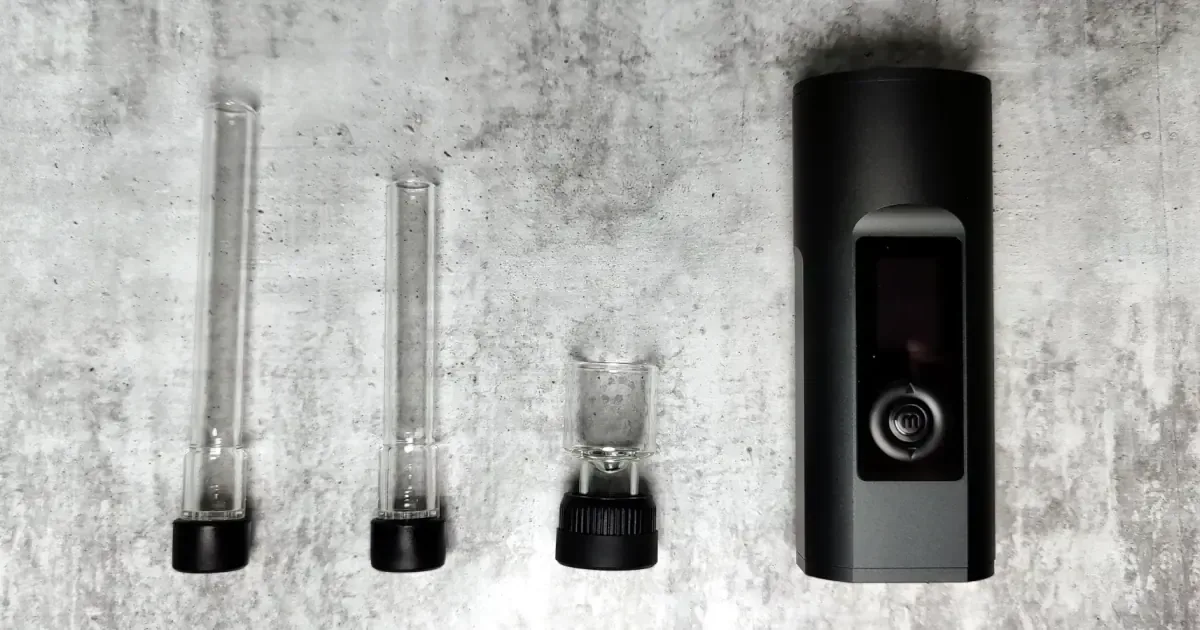
The major cannabis terpenes boil between 155°C and 200°C at normal pressure: alpha-pinene at 155°C (311°F), myrcene at 167°C (333°F), limonene at about 177°C (351°F), terpinolene at 185°C (365°F) and linalool at 198°C (388°F). The cannabinoid figures on most charts (THC at 157°C, CBD at 160 to 180°C) are vacuum distillation numbers, not settings; in a vaporizer the useful THC window is 180 to 210°C (356 to 410°F). Combustion starts around 230°C (446°F), the hard ceiling on everything below. The tables give both scales, the aroma each terpene carries, and which catalog devices reach each point. To watch the same data shift as you change the setting, drag the slider on our vaporization temperature calculator.
Contents9 sections
- Why a Boiling Point Chart Is Only Half the Story
- Cannabinoid Boiling Points: THC, CBD, CBG, THCV and CBN
- Terpene Boiling Points: Myrcene, Limonene, Pinene, Linalool, Caryophyllene, Humulene and Terpinolene
- Where Combustion Starts: 230°C (446°F) Is the Ceiling
- Which Vaporizers Actually Reach These Temperatures
- How to Use the Chart When You Temp Step
- Flavor Is Fact, the Entourage Effect Is Not Settled
- Frequently Asked Questions
- The Bottom Line
Why a Boiling Point Chart Is Only Half the Story
Boiling points depend on pressure. Terpenes are small, volatile molecules measured at atmospheric pressure, so their numbers mean what you think. Cannabinoids are far heavier and would decompose before boiling in open air, so chemists distill them under vacuum, and those vacuum figures are what ended up on every chart. PubChem's THC record lists 200°C at 0.02 mmHg; the 157°C figure repeated everywhere is a similar reduced-pressure value. A 2023 paper in Cannabis and Cannabinoid Research put THC's real atmospheric boiling point above 400°C, and a December 2025 study in the Journal of Cannabis Research measured it by thermogravimetric analysis at 245 ± 6°C for THC and 378 ± 4°C for THCV.
The reassuring part: nothing needs to boil to vaporize, any more than a puddle needs to boil to dry out. In hot moving air, the thin film of resin on ground flower evaporates well below its boiling point, and faster the hotter you run. That's why the original Cal NORML and MAPS bench test measured THC in vapor at 185°C, and why Lanz and colleagues (2016) recovered 55 to 83 percent of the THC in flower at a 210°C setting, depending on the device.
Cannabinoid Boiling Points: THC, CBD, CBG, THCV and CBN
| Cannabinoid | Chart figure | What that number really is | Practical vaping window | Reachable on |
|---|---|---|---|---|
| THC | 157°C / 315°F | Reduced-pressure value; measured atmospheric boiling point 245 ± 6°C (473°F) | 180 to 210°C (356 to 410°F) | Every adjustable device in the catalog |
| CBD | 160 to 180°C / 320 to 356°F | Vacuum figure; atmospheric estimate about 464°C (867°F) | 200 to 220°C (392 to 428°F) for fuller recovery | Solo 3, XMAX V3 Pro, Lobo, Tinymight 2 (220°C+); Venty, Mighty+, Crafty+ stop at 210°C |
| CBG | 52°C / 126°F | No boiling point on PubChem; 52°C matches published melting points | Treat like THC: 180 to 210°C (356 to 410°F) | Every adjustable device |
| THCV | 220°C / 428°F | Reduced-pressure value; measured atmospheric boiling point 378 ± 4°C (712°F) | Top of your range, 210 to 220°C (410 to 428°F) | Solo 3, V3 Pro, Lobo (220 to 221°C), Volcano Hybrid (230°C), Tinymight 2 (250°C) |
| CBN | 185°C / 365°F | 0.05 mmHg figure (NTP data on PubChem) | 190 to 210°C (374 to 410°F); older flower carries more | Every adjustable device, including the PAX 3 |
Raw flower is mostly THCA, which needs heat to become THC, and Lanz's group found that conversion better than 97 percent complete at 210°C. Push past 200°C at some point and you get both conversion and extraction; hold at 165°C for the flavor and most of the cannabinoids stay in the bowl. Our guide to what temperature to vape flower covers how that trade-off feels. As for CBG, we found no experimental boiling point for it at any pressure; the 52°C figure that circulates (our calculator still carries it so it matches what people search for) looks like a melting point copied into a boiling chart. Expect it to behave like THC and CBD.
Terpene Boiling Points: Myrcene, Limonene, Pinene, Linalool, Caryophyllene, Humulene and Terpinolene
| Terpene | Boiling point | Aroma and flavor | Also found in | Reachable on |
|---|---|---|---|---|
| alpha-Pinene | 155 to 156°C / 311 to 313°F | Sharp pine, fresh, slightly resinous | Pine needles, rosemary | Venty, Mighty+, Crafty+ (40°C floor), Solo 3 (50°C), XMAX V3 Pro (100°C), Tinymight 2 (140°C). Not the PAX 3 or Lobo, whose floors sit above it |
| beta-Myrcene | 166 to 167°C / 331 to 333°F | Earthy, musky, a hint of clove | Mango, hops, lemongrass | Same list as pinene |
| Limonene | 176 to 178°C / 349 to 352°F | Bright citrus peel | Lemon and orange rind | Same list, plus the Lobo (160°C floor). The PAX 3's lowest preset, 182°C, sits just above it |
| Terpinolene | 183 to 187°C / 361 to 369°F | Piney, floral, herbal, faintly sweet | Apple, tea tree, nutmeg | Every adjustable device, including the PAX 3 |
| Linalool | 198°C / 388°F | Floral, lavender, a spicy edge | Lavender, coriander | Every adjustable device |
| beta-Caryophyllene | 256 to 263°C / 493 to 505°F (charts quote 130°C, its value at 14 mmHg) | Black pepper, warm spice, woody | Black pepper, cloves | Above every flower vaporizer's ceiling as a boiling point; still reaches the vapor by evaporation, more of it in hotter draws |
| alpha-Humulene | 276°C / 529°F (charts quote 106°C, a vacuum value) | Hoppy, earthy, woody | Hops, basil, sage | Same as caryophyllene |
The first five rows are PubChem atmospheric values and match the popular charts within a degree or two. The last two are where the charts go wrong. Caryophyllene and humulene are heavier 15-carbon sesquiterpenes and boil far higher: PubChem's beta-caryophyllene record gives 256 to 259°C at 760 mmHg beside the 129 to 130°C value measured at 14 mmHg, and the 2023 vapor pressure paper lists 263°C for caryophyllene and 276°C for humulene. You still taste pepper and hops in a session, for the same evaporation reason THC comes across below its boiling point, but expect them in the warm draws near the end rather than the first cool pull. Our terpene guide covers the aroma profiles in more depth.
Where Combustion Starts: 230°C (446°F) Is the Ceiling
In the Cal NORML and MAPS test, later published in the Journal of Cannabis Therapeutics, the sample produced THC at 185°C (365°F), significant benzene appeared at 200°C (392°F), and combustion occurred at around 230°C (446°F) and above. Everything here is about heating flower in a dry herb vaporizer; nicotine e-cigarettes and 510 oil cartridges heat liquids over a coil with different chemistry, and none of these numbers apply to them.
Warning: Combustion starts around 230°C, the hard ceiling for a dry herb vaporizer. Benzene becomes detectable well before that, around 200°C, so treat a device's top settings as headroom, not a session target.
Device ceilings reflect that line. The Venty, Mighty+ and Crafty+ stop at 210°C; the Solo 3, XMAX V3 Pro and Lobo at 220 or 221°C. The Volcano Hybrid reaches 230°C and the Tinymight 2 250°C, so their top settings sit on or over the combustion point: headroom, not a session target.
Which Vaporizers Actually Reach These Temperatures
Two questions decide whether a device covers the chart: can it start below pinene and myrcene, and can it reach 220°C for CBD and THCV? Ranges are the catalog spec tables; prices are the listed price on each device page.
| Device | Catalog range | Starts below pinene (155°C)? | Reaches 220°C? | Listed price |
|---|---|---|---|---|
| Venty | 40 to 210°C (104 to 410°F) | Yes | No (210°C cap) | $449 |
| Mighty+ | 40 to 210°C (104 to 410°F) | Yes | No (210°C cap) | $399 |
| Crafty+ | 40 to 210°C (104 to 410°F) | Yes | No (210°C cap) | $279 |
| Arizer Solo 3 | 50 to 220°C (122 to 428°F) | Yes | Yes | $345 |
| XMAX V3 Pro | 100 to 220°C (212 to 428°F) | Yes | Yes | $110 |
| PAX 3 | 182 to 215°C (360 to 419°F) | No | No | $250 |
| POTV Lobo | 160 to 221°C (320 to 430°F) | No | Yes | $160 |
| Tinymight 2 | 140 to 250°C (284 to 482°F) | Yes | Yes, and well past combustion | $349 |
| Volcano Hybrid | 40 to 230°C (104 to 446°F) | Yes | Yes | $699 |
The Storz & Bickel portables cover every terpene and the whole practical THC window but can't reach 220°C, so a Venty owner chasing THCV or the last of the CBD in hemp flower runs at 210°C for longer rather than hotter. The PAX 3's four presets (182, 193, 204 and 215°C in our review) all start above pinene, myrcene and limonene. The Arizer Solo line and the XMAX V3 Pro cover the chart end to end and are two of the cheaper ways to do it: in our July 30, 2026 price scrape the Solo 3 was $299.99 direct from Arizer and $239.99 at To the Cloud Vapor Store, and the V3 Pro was $89 at VPM.
How to Use the Chart When You Temp Step
Flavor and full extraction don't happen at the same temperature, which is the point of stepping. On a device that goes low enough:
- Open at 165 to 175°C (329 to 347°F). Pinene and myrcene are boiling, limonene is close, THC is only trickling out. The brightest-tasting draws of the bowl, and the weakest.
- Move to 185 to 195°C (365 to 383°F). Limonene, terpinolene and, at the top, linalool join in, and cannabinoid output climbs.
- Finish at 200 to 210°C (392 to 410°F). Terpenes are mostly spent, the vapor is warmer and denser, and the remaining cannabinoids come across. For more CBD or THCV, 215 to 220°C for the last draw or two if your device allows it.
- Stop when the vapor thins and the taste goes flat. Further only browns the material.
Tip: Stop stepping the temperature up once the vapor thins and the taste goes flat. Pushing further from there only browns the material without adding anything worth having.
If density matters more than nuance, our guide to bigger vapor clouds covers the temperature side; if you live in step one, the best vaporizers for flavor chasers are built around that low, precise range. Blending high-CBD and high-THC flower shifts the target too, since CBD wants the hotter end: the flower blending calculator works out the mix, and this chart tells you where to finish.
Flavor Is Fact, the Entourage Effect Is Not Settled
What terpenes do to taste and smell is not in dispute. Whether terpenes change how a session feels, the so-called entourage effect, has much weaker evidence. A 2024 review in Pharmaceuticals concluded that synergistic or additive enhancement of cannabinoid effects by terpenes "remains unproven," with no reliable evidence of synergy at the cannabinoid receptor level. A 2020 study in Frontiers in Pharmacology tested myrcene, alpha-pinene, beta-pinene, beta-caryophyllene and limonene at CB1 and CB2 receptors and found none of them, alone or mixed, changed receptor signaling or altered THC's action there. That doesn't rule out other mechanisms; it means "myrcene makes it sedating" is a marketing line, not a finding. Nothing in this guide is medical advice.
Note: Current evidence does not show terpenes changing how a session feels at the cannabinoid receptor level, which does not rule out other mechanisms. Claims like "myrcene makes it sedating" are marketing lines, not established findings.
Frequently Asked Questions
What temperature does THC vaporize at?
THC starts coming off flower below 185°C (365°F), the temperature at which the Cal NORML and MAPS test measured it in vapor, but meaningful extraction happens between 180 and 210°C (356 to 410°F). The 157°C (315°F) figure on most charts is a reduced-pressure distillation value, not a setting; the measured atmospheric boiling point is about 245°C.
Do terpenes burn off before cannabinoids?
The lighter ones do. Pinene, myrcene and limonene boil between 155 and 178°C, so they leave the bowl early and are largely gone by 200°C. That's why low temperatures taste vivid and feel light. Caryophyllene and humulene boil far higher and hang around to the end.
What temperature is best for maximum flavor?
Roughly 160 to 180°C (320 to 356°F), where the main monoterpenes are boiling and the cannabinoids are only partly extracted. You need a device that goes that low: the Venty, Mighty+, Solo 3 and XMAX V3 Pro all do, while the PAX 3 starts at 182°C. Expect weaker effects there and step up afterward.
At what temperature does combustion start?
Around 230°C (446°F) in the published bench test, with benzene already detectable at 200°C. Most vaporizers cap between 210 and 221°C for that reason. Devices that go higher, like the Tinymight 2 at 250°C, have headroom rather than a recommended top setting.
The Bottom Line
Read the terpene table as a map of where flavor lives, the cannabinoid table as a reminder that the popular numbers are lab artifacts and the real work happens between 180 and 220°C, and 230°C as a wall. Pick a device that covers the part of the chart you care about, then dial it in on the vaporization temperature calculator, which shows which compounds are in play at any setting in either scale.
About the author
Practical context from the editor behind this guide.