Guide
How to Inhale From a Dry Herb Vaporizer (Without Coughing)
26 August 2026 • 9 min read (Updated 9 September 2026)
Draw slow and gentle for 3 to 5 seconds, skip the breath-hold, and match your sip to your device. Cough causes, water filtration, and a 5-draw first-session script.
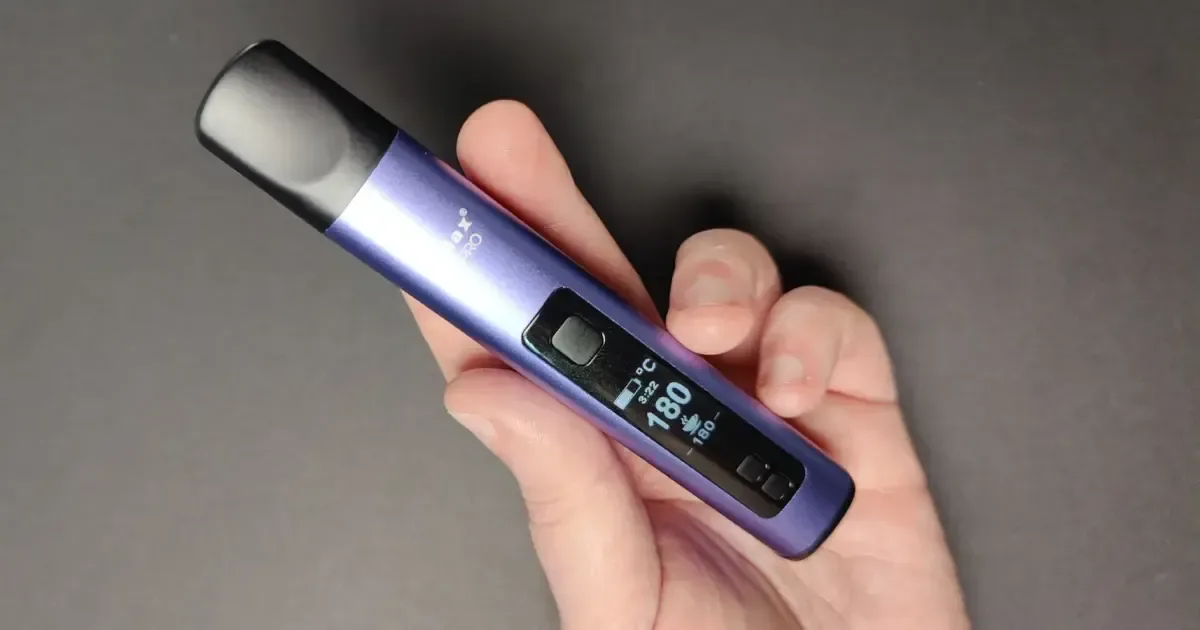
Draw from a dry herb vaporizer slowly and gently, about three to five seconds on most portables, then breathe the vapor in like a normal breath and let it out. Don't hold it, and don't rip it like a cigarette or a bong. The right sip depends on how your device heats: short sips on a conduction oven like the PAX 3, a long slow pull on a convection device like the Tinymight 2, barely a pull at all from a Volcano balloon. Coughing with no smoke in sight nearly always comes down to four fixable things: temperature, dry herb, drawing too fast, or a hot mouthpiece.
Contents9 sections
- Mouth-to-Lung vs Direct-to-Lung, in Plain Words
- How Long Should You Inhale? Draw Style by Device Class
- What Draw Resistance Should Feel Like
- Why Vapor Makes You Cough With No Smoke in Sight
- Should You Hold Vapor In?
- Water Filtration: The Comfort Upgrade
- Your First Session: A 5-Draw Script
- Frequently Asked Questions
- The Bottom Line
Mouth-to-Lung vs Direct-to-Lung, in Plain Words
Both terms come from the nicotine e-cigarette world; they apply loosely to flower vaporizers, and nothing here concerns nicotine devices or 510 oil cartridges. Arriving from smoking? From smoke to vapor covers the wider transition; this is the missing lesson between packing and cleaning.
Mouth-to-lung (MTL): draw vapor into your mouth, pause, then breathe it down as a second step. It's where everyone should start.
Direct-to-lung (DTL): one continuous pull straight into the lungs, like breathing through a wide straw. More vapor per draw, and more cough risk if the vapor is hot. It's the technique behind bigger vapor clouds and suits open-airflow devices and water pipes. Move to it when you want more per draw, not before.
How Long Should You Inhale? Draw Style by Device Class
Heating type and heat-up time come from our catalog specs; draw lengths are our recommendations for a comfortable first few sessions. If the session versus on-demand split is new to you, session vs on-demand vaporizers explains it.
| Device class | Catalog example | Heating | Heat-up | Draw length and pace | Resistance to expect |
|---|---|---|---|---|---|
| Session, conduction oven | PAX 3 | Conduction | Under 30 s | 3 to 5 s gentle sips | Medium, firmer as the oven packs down |
| Session, glass-stem hybrid | Arizer Solo 3 | Hybrid | About 15 s | 5 to 8 s, slow and even | Firm; the tightest draw here |
| Session, hybrid convection | Mighty+, Venty | Hybrid convection | About 60 s / 20 s | 5 to 10 s, steady | Low; the Venty adjusts from tight to open |
| On-demand convection | Tinymight 2 | Convection | About 3 s | 8 to 15 s, slow, button held throughout | Open; the draw carries the heat |
| Manual, torch-heated | DynaVap M 7 | Hybrid | Until the cap clicks | Slow, right after the click; 2 to 4 cycles per bowl | Adjustable via the airport holes |
| Desktop balloon | Volcano Hybrid | Hybrid convection | 1 to 2 min | Any length, at your own pace | Virtually none |
Session conduction (PAX 3). The oven stays hot, so your breath carries nothing. PAX's own how-to page says a short 3 to 5 second gentle draw is all that's needed and that pulling harder or longer won't make more vapor: "sip it, don't rip it." When we reviewed the PAX 3, the oven needed a stir midway through a bowl.
Session glass-stem hybrid (Solo 3). Arizer rates the Solo 3 at 80 percent convection, but the herb sits in a glass tube pushed into the heater, so the draw is tight. When we reviewed the Solo 2, restrictive airflow was its main con and the longer stem noticeably cooled the vapor. Draw slow and even, and don't fight it.
Session hybrid convection (Mighty+ and Venty). Storz & Bickel rates the Mighty+ at 10 liters per minute with low draw resistance, and the Venty at up to 20 through a three-notch airflow wheel. Start the Venty on the first notch for MTL sips and open it fully for a DTL breath; its flowmeter senses how hard you pull and adjusts the heater to match.
On-demand convection (Tinymight 2). It heats only while you hold the button, and Tinymight's guidance is to draw slowly with the button held, because a longer, gentler draw carries the heat through the herb. Draw fast and you pull cool air past the heater and get thin vapor. When we reviewed the XMAX V3 Pro, its on-demand mode demanded the same long, slow draws.
Manual, torch-heated (DynaVap M 7). Heat the cap until it clicks, then draw slowly. DynaVap's guide says to expect vapor for around 20 to 30 seconds after a click and two to four heat cycles per bowl. Cover the airport holes on the stem for a denser, warmer draw, or leave them open for a cooler one. Torch technique is in how to use a DynaVap.
Desktop balloon (Volcano Hybrid). A fan fills a bag, you detach it, and you draw whenever you like. Storz & Bickel describes virtually no draw resistance from the Easy Valve balloon, and bagged vapor is cooler than anything off a portable. Take small mouthfuls; a full bag holds far more than one breath.
What Draw Resistance Should Feel Like
A good draw feels like a thick milkshake through a normal straw: some resistance, no strain. If you're working for it, the pack is usually the problem; the dry-pull test in how to pack a dry herb vaporizer catches an over-tight chamber before you heat it. A device that suddenly draws harder than last week has a clogged screen.
Why Vapor Makes You Cough With No Smoke in Sight
Vapor can be nearly invisible and still hot enough to irritate. Each trigger feels different.
| Trigger | How to tell | Fix |
|---|---|---|
| Temperature too high | Harsh and hot at the back of the throat from the first draw | Drop 10 to 15°C and step back up; start near 180°C on a digital device |
| Dry, crumbly herb | Thin, scratchy vapor that turns harsh fast | Store flower with a humidity pack; skip material that turns to dust in the grinder |
| Drawing too fast | Cough mid-draw; thin vapor on convection devices | Slow down to the draw length for your class above |
| Hot mouthpiece or short vapor path | Heat at the lips more than the throat, worse late in a session | Longer stem, glass mouthpiece, cooling unit, or water; cool the device between bowls |
What temperature to vape flower explains what each range does. For comfort, harshness climbs steeply past 200°C, so save the top end for the last draws of a bowl.
Warning: Harshness climbs steeply past 200°C, so treat your device's top temperatures as something to save for the last draws of a bowl rather than where you start a session.
Should You Hold Vapor In?
No. The habit comes from smoking, and it doesn't hold up even there. In 1989, Zacny and Chait had regular smokers hold marijuana smoke for 0, 10 or 20 seconds under a controlled puffing procedure and found little evidence that the response depended on breath-hold duration. Their 1991 follow-up agreed, and found the 20 second hold mainly increased carbon monoxide absorbed. Those studies used smoke, and we know of no equivalent vaporizer trial, but there's no reason to expect a breath-hold to add anything except irritation.
Note: Holding vapor in does not help. Controlled studies on smoked cannabis found little evidence that breath-hold duration changed the response, and a longer hold mainly increased carbon monoxide uptake instead.
This guide is about technique, not health. Nothing here is medical advice.
Water Filtration: The Comfort Upgrade
Water cools vapor and takes the edge off higher temperatures. If you've fixed temperature, moisture and draw speed and still cough, it's the biggest remaining upgrade. Joint size matters more than bong size: a restrictive portable suits a 10mm or 14mm joint, while a Venty or a desktop can fill an 18mm piece. Choosing the best bong size for your vaporizer covers the matching, and a DynaVap's 10mm mouthpiece drops straight into a 10mm joint.
Tip: If you have already corrected temperature, dry herb and draw speed but still cough, water filtration is the biggest remaining upgrade, since it cools vapor and softens the edge off higher temperatures.
Your First Session: A 5-Draw Script
- Set up low and slow. Set 180°C on a digital device, pack a light, even chamber, and wait for the ready signal. On a DynaVap, heat until the click and stop.
- Draw one is a primer. Two or three seconds, into the mouth only, then exhale. You're checking heat and pack, not dosing.
- Draw two is your first real pull. Mouth-to-lung, at the draw length for your device class (on an on-demand or manual device, that's the whole button-hold or click-and-sip). Pause, breathe it down, exhale normally.
- Wait two minutes, then draw three at the same pace. It's easy to overdo it with vapor. If it's harsh, drop 10°C.
- Draws four and five are optional. Nudge up 5 to 10°C on the last one for a stronger finish, or stop. There's no prize for finishing the bowl.
Frequently Asked Questions
How long should I inhale from a dry herb vaporizer?
Three to five seconds on a conduction oven like the PAX 3, five to ten on a hybrid like the Mighty+, eight to fifteen on on-demand convection like the Tinymight 2, and a slow draw right after the click on a DynaVap.
Why do I cough when there's no smoke?
Vapor is far less visible than smoke but can still be hot enough to irritate, especially above 200°C. Dry herb, a fast draw, and a hot mouthpiece on a short vapor path are the other usual causes.
Should I hold vapor in?
No. Two controlled studies by Zacny and Chait found breath-holding didn't meaningfully change the response to marijuana smoke and mostly increased carbon monoxide uptake. A normal inhale and exhale is all a vaporizer needs.
Why don't I feel anything even though my technique seems right?
Check temperature and pack first. Vapor at 160 to 170°C is very light, and an over-packed or half-empty chamber limits each draw. Bump the temperature 10°C, do the dry-pull test, and give it more time than a cigarette would take.
Is mouth-to-lung or direct-to-lung better for dry herb?
Mouth-to-lung, because it's gentler and easier to control. Direct-to-lung earns its place once you're comfortable, ideally with water or an open-airflow device like the Venty, but it isn't required to get a full effect.
The Bottom Line
Slow draw, a temperature that isn't fighting you, herb that isn't dust, and a mouthpiece that isn't cooking your lip. Get those four right and coughing mostly disappears inside a week. Common dry herb vaporizer mistakes covers the rest of the learning curve, and the best vaporizers for beginners leans toward forgiving session devices for these exact reasons.
About the author
Practical context from the editor behind this guide.