Guide
How to Make AVB Butter and Coconut Oil (No Decarb Needed)
26 August 2026 • 9 min read (Updated 9 September 2026)
AVB is already decarboxylated, so it goes straight into butter or coconut oil. Three low-heat methods, a ratio table by vape temperature, and honest dosing math.
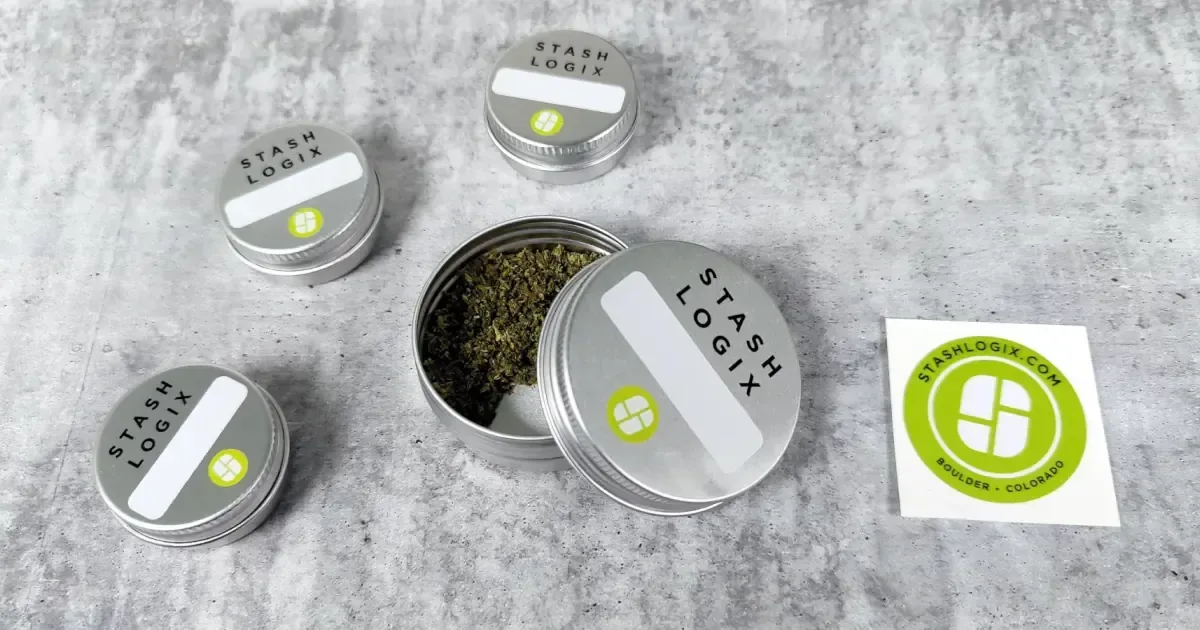
Already vaped bud does not need decarboxylating because your vaporizer already did it. THCA converts to THC in minutes at temperatures well below where any dry herb vaporizer runs, so the brown leftovers in your chamber are infusion-ready the moment they cool. Skip the oven, warm the AVB gently in butter or coconut oil below about 90°C (200°F), strain, and you're done. Below: three ways to do it, a ratio table by vape temperature, and how to estimate a batch's strength before you eat any.
Contents12 sections
- Why AVB Doesn't Need Decarboxylation
- What Temperature Should You Infuse AVB At?
- Method 1: Stovetop AVB Butter
- Method 2: Slow Cooker AVB Oil
- Method 3: Mason Jar Water Bath
- How to Strain AVB Butter
- How Much AVB Per Stick of Butter?
- How Strong Will It Be? Estimating Potency
- Start Low, Because Edibles Are Slow
- How Long Does AVB Butter Keep?
- Frequently Asked Questions
- The Bottom Line
Why AVB Doesn't Need Decarboxylation
A 2016 decarboxylation study found THCA, the form THC takes in fresh flower, approached zero after 30 minutes at 110°C, 9 minutes at 130°C and 6 minutes at 145°C. Dry herb vaporizers run between roughly 160°C and 230°C for several minutes a session, well past that. When researchers ran a Volcano Medic, a Plenty, an Arizer Solo and a DaVinci at 210°C, the THC in the vapor was 97.3% or more decarboxylated, and the material left behind saw the same heat.
Baking it again buys you a smellier kitchen and a little more degradation. Bowls pulled early at low temperatures are still activated; they just have more left in them, which matters for the ratios below.
What Temperature Should You Infuse AVB At?
Hold the fat between roughly 70°C and 90°C (160°F to 195°F) and never let it boil. Decarb is done, so cannabinoids dissolve into warm fat with time and stirring, not heat. Butter is only 80% milkfat by legal definition, so hard bubbling means its water is boiling off and the milk solids are about to brown, and hotter also drives off whatever terpenes survived vaping.
Warning: Keep the fat between about 70°C and 90°C and never let it boil. Hard bubbling means the water is boiling off and the milk solids are about to brown, and the extra heat also drives off any surviving terpenes.
| Method | Target temperature | Time | Best for |
|---|---|---|---|
| Stovetop saucepan | 70-85°C (160-185°F), lowest burner | 45-90 min | Speed, small batches |
| Slow cooker | 70-85°C, checked with a thermometer | 2-4 hours | Big batches, hands-off |
| Mason jar water bath | Water at 80-90°C (175-195°F), below a simmer | 2-3 hours | Least smell, easiest cleanup |
A cheap probe thermometer takes the guesswork out of all three; without one, the rule is "melted, never bubbling." Whatever the method, bin any AVB that smells musty or feels damp.
Method 1: Stovetop AVB Butter
- Melt the butter or oil in a small saucepan on the lowest setting with two or three tablespoons of water per stick (it keeps the temperature down).
- Stir in the AVB and hold the pan at 70-85°C. The odd lazy bubble is fine; a rolling simmer is not.
- Cook for 45 to 90 minutes, stirring every ten minutes. Longer doesn't hurt; hotter does.
- Strain, then refrigerate. The water settles under the set fat and pours off.
Method 2: Slow Cooker AVB Oil
"Low" on most slow cookers describes how fast the pot heats, not where it stops, and left long enough it reaches a simmer. Use Keep Warm if you have it, check with a thermometer after 30 minutes, and leave it 3-4 hours if it holds between 65°C and 85°C. Otherwise run Low with the lid ajar and a splash of water, check at the one hour mark, and drop to Warm or off the moment it passes 90°C. Stir hourly.
Method 3: Mason Jar Water Bath
- Put the fat and AVB in a heatproof mason jar with a couple of centimeters of headspace. Screw the lid on finger-tight only, so pressure can escape.
- Stand the jar on a trivet or folded cloth in a pot and add water three quarters of the way up the jar.
- Hold the water at 80-90°C, below a visible simmer, for 2-3 hours, topping up as it evaporates.
- Lift the jar out with tongs, cool, then strain.
Tip: A mason jar water bath is forgiving because water can't pass 100°C at atmospheric pressure, so the contents can't scorch however distracted you get while it's on the stove.
How to Strain AVB Butter
AVB is crumblier than fresh flower and sheds grit that slips through a single layer of cheesecloth. Line a mesh strainer with cheesecloth folded into four, or a paper coffee filter if you want it clear, and let gravity do most of the work. Press gently at the end: wringing hard forces plant particles through with the last few grams of fat, and the butter tastes worse for it. If the roasted taste bothers you regardless, water curing the AVB first removes most of it at the cost of a little potency.
How Much AVB Per Stick of Butter?
It depends almost entirely on how hot you vaped it. Full sessions at 210°C left 15% or less of the original cannabinoids in the spent material in the lab tests above, while the original Volcano validation study measured about 54% of loaded THC reaching the balloon, the figure behind the dosing calculator's 46% vaporizing loss. Weigh your AVB; cup measurements are useless with something this fluffy.
| Typical vape temperature | AVB color | Rough share of original THC left | AVB per stick of butter (113 g) | AVB per cup of coconut oil (about 215 g) |
|---|---|---|---|---|
| 160-180°C, flavor sessions | Light tan to golden | 30-50% | 4-7 g | 8-14 g |
| 180-200°C, standard sessions | Medium brown | 15-30% | 7-10 g | 14-20 g |
| 200-230°C, or run until no vapor | Dark brown to near black | 15% or less | 10-14 g | 20-28 g |
These ratios aim for very roughly 250-400 mg of THC per stick on paper from 20% flower, or around 10-15 mg per cookie in a 24-cookie recipe; use less AVB for weaker flower or mild toast butter. Most jars mix temperatures, so go by the dominant color; our guide to what temperature to vape flower explains why the same strain leaves such different leftovers.
How Strong Will It Be? Estimating Potency
Nobody can hand you a lab number, but four steps get you a defensible ceiling. Take 8 g of medium-brown AVB from 20% flower in one stick of butter:
- Starting strength. 20% THC is 200 mg per gram of fresh flower.
- Apply the vape loss. Medium AVB keeps roughly 15-30%, so 30-60 mg per gram of AVB.
- Scale to the batch. 8 g at 30-60 mg is 240-480 mg in the stick, or 30-60 mg per tablespoon.
- Divide by servings. One stick in a 24-cookie recipe puts each cookie at 10-20 mg on paper.
Treat that as a ceiling. Fat doesn't pull out every milligram, some stays in the cheesecloth, and your AVB was probably vaped harder than you remember. Real batches land below the estimate, which is the point.
Note: Treat any potency estimate as a ceiling, not an exact number. Fat does not pull out every milligram, some stays behind in the cheesecloth, and real batches usually land below the math, which is the point.
The dosing calculator cross-checks step 3. It takes a cannabinoid percentage, a target dose in milligrams and a consumption method, and returns grams of material. For AVB, enter your estimated residual percentage instead of the label (20% flower at a 25% remainder is 5%), your target per serving, and set the method to Ignore so it doesn't subtract inhalation losses a second time. It answers in grams of AVB per serving; multiply by servings to size the batch, and disregard its 0.1 g bowl count.
Start Low, Because Edibles Are Slow
New York's cannabis regulator lists onset at up to two hours or more and effects lasting 4 to 12 hours and suggests newer consumers start around 2.5 mg. Colorado's guidance is to take less than a single 10 mg serving and wait at least 90 minutes, up to four hours, before eating more. The classic failure, per the National Institute on Drug Abuse, is assuming the edible isn't working, taking more, and having both doses land at once. With a homemade batch whose strength is an estimate, the sensible first serving is a fraction of what the math says, the same habit that makes microdosing with a vaporizer work. None of this is medical advice; it's how to avoid a bad evening.
How Long Does AVB Butter Keep?
Plain butter keeps 1 to 2 months refrigerated and 6 to 9 months frozen per University of Nebraska guidance. Infused butter has had water and plant material through it, so be more conservative: two to three weeks in a sealed jar in the fridge, or frozen in tablespoon-sized portions in an ice cube tray. Label it so nobody mistakes it for the regular stuff.
Frequently Asked Questions
Do you need to decarb AVB before making butter?
No. THCA converts to THC within minutes at 130-145°C, and vaporizers run hotter than that for longer, so a second oven step only adds degradation and smell.
How much AVB do I need per stick of butter?
Between 4 g and 14 g per 113 g stick, depending on how hot it was vaped. Light golden AVB sits at the bottom of that range, dark AVB from full 200°C+ sessions at the top.
How strong will AVB butter be?
Weaker than the same weight of fresh flower, usually by a wide margin. Multiply the flower's THC percentage by the share you think survived vaping (roughly 15-50%), then by grams of AVB, and treat the answer as a ceiling.
Butter or coconut oil?
Both work. Butter tastes better in baking but is only about 80% fat and needs the water poured off after chilling. Refined coconut oil is nearly all fat, dairy-free and neutral in flavor.
How long does AVB butter keep?
Two to three weeks in a sealed jar in the fridge, or several months frozen in portions. Plain butter is rated for longer, but infused butter has had water and plant matter through it.
The Bottom Line
Hold the fat under 90°C, weigh the AVB against how hot you vaped it, and do the potency math before the first serving, not after. It's the second half of why a dry herb vaporizer saves money, and the cost per session calculator puts a number on your own habits. If you'd rather stay out of the kitchen, what to do with already vaped bud covers capsules, tinctures and the rest. A jar filled every time you clean out the chamber is where it starts.
About the author
Practical context from the editor behind this guide.