Guide
DynaVap vs Electric Vaporizers: Which Should You Buy?
26 August 2026 • 9 min read (Updated 9 September 2026)
DynaVap vs electric vaporizers compared on real prices, five-year running costs, battery replacement, stealth, groups, travel and learning curve, with a decision table.
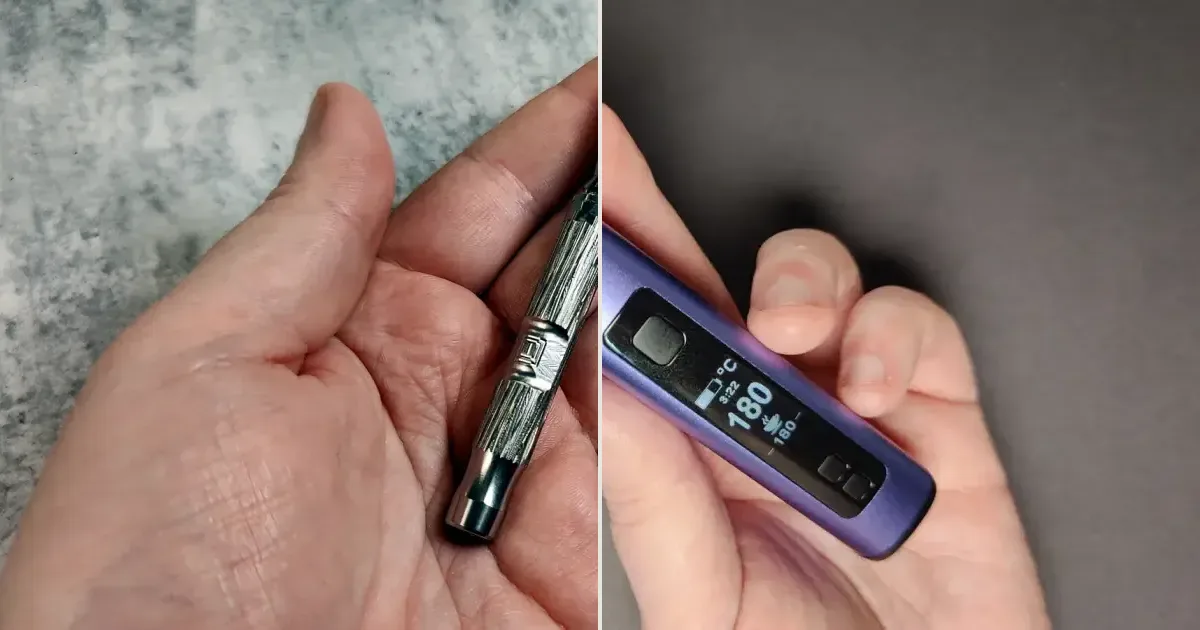
A DynaVap is cheaper to buy, has no battery to wear out and fits in any pocket, but you heat it by hand with a torch and it serves one person at a time. An electric vaporizer costs two to five times more, holds an exact temperature for a whole session and passes around a room, but its battery is a wear item and on most flagships it can't be swapped at home. Buy a DynaVap if you like a small ritual and want the lowest entry price. Buy electric if you want push-button consistency or share sessions. Plenty of enthusiasts end up with one of each.
Contents11 sections
- What Actually Separates a DynaVap From an Electric Vaporizer
- DynaVap vs Electric: Upfront and Five-Year Cost
- Learning Curve: The Click vs the Button
- Which Smells Less and Which Is Stealthier?
- Solo Sessions vs Groups
- Travel and Off-Grid Use
- Maintenance and How Long Each Lasts
- Which Should You Buy? A Decision Table by User Type
- Why So Many People End Up Owning Both
- Frequently Asked Questions
- The Bottom Line
What Actually Separates a DynaVap From an Electric Vaporizer
A DynaVap has no electronics. You pack a tiny tip (around 0.1g on most models), fit the cap, and rotate it over a torch flame until a bimetal disc inside clicks. DynaVap's own FAQ puts that click at roughly 240°C, plus or minus 10°C, which is why the catalog lists the M 7 and its siblings as 230 to 250°C devices. Draw, let the cap cool until it clicks again, reheat. The technique is covered in our guide to how to use a DynaVap.
An electric vaporizer replaces the torch and the disc with a heater, a battery and a thermostat. Set 185°C on a Venty and it holds 185°C, with a 20 second heat-up and a 40 to 210°C range per Storz & Bickel's product page. That precision is the real difference, not the vapor. Our reviews of the DynaVap 2021 M, 2021 Omni and M+ all found vapor quality and efficiency excellent once technique was dialed in. "Once" is doing some work there.
DynaVap vs Electric: Upfront and Five-Year Cost
DynaVap publishes its own version of this comparison, and it contains no numbers. Here are ours. Prices are what our tracker recorded at US retailers on July 30, 2026. Running costs are our estimates for five years of daily use, with the assumptions under the table.
| Device | Type | Price (July 2026) | Battery reality | Estimated 5-year running cost | Estimated 5-year total |
|---|---|---|---|---|---|
| DynaVap B2 | Analog | $59 at DynaVap | None | Torch included (ships empty), butane ~$250, spares ~$50 | ~$360 |
| DynaVap M 7 | Analog | $89 at DynaVap | None | Torch ~$15, butane ~$250, spares ~$50 | ~$405 |
| XMAX V3 Pro | Electric, budget | $89 at VPM | Removable 18650 | Two spare cells ~$25, electricity negligible | ~$115 |
| Crafty+ | Electric, mid | $279 at The Stash Shack | Internal, not user-swappable | One factory battery service or a second unit | $279 plus service |
| Tinymight 2 | Electric, premium | $349 at To the Cloud Vapor Store | Removable 18650 | Two spare cells ~$25 | ~$375 |
| Venty | Electric, flagship | $449 at Storz & Bickel | Internal 2x18650, not user-swappable | One factory battery service or a second unit | $449 plus service |
Assumptions: a single-flame torch at about $15 (the B2 ships with a DynaTorch, unfilled); butane at roughly $50 a year for a daily user, about one 300ml can every six to eight weeks; DynaVap spares (screens, o-rings, the odd cap) at $10 a year; 18650 cells at $12 each, replaced every two to three years. Swap the torch for an induction heater and you add well over $100, which erases most of the DynaVap's price advantage.
Two things fall out of that table. The cheapest five-year path is not the DynaVap but a budget electric with a removable cell, because butane is cheap per can and compounds anyway. And the DynaVap beats every electric with a sealed battery, because those reach year three or four with a tired cell and no cheap fix. Our guide to vaporizer battery life puts lithium-ion life at 300 to 500 charge cycles, about two years for a daily user. Either way, the bigger saving comes from leaving combustion, covered in can a dry herb vaporizer save you money.
Warning: When a lithium-ion cell finally wears out, that's about a $12 problem on a removable-cell device, but on a sealed one it means a warranty claim, a paid service, or a new purchase.
Learning Curve: The Click vs the Button
This is why people give up on a DynaVap. All three of our reviews called the first session awkward and rushed, and all three said it passed within a few bowls. What the spec sheet hides is how much depends on where you aim the flame: low on the cap for a slower heat-up and thick, warm vapor; near the top for a faster, lighter, more flavorful draw. Not a flaw, but homework.
Warning: Where you aim the torch flame on a DynaVap matters, since aiming it at the tip's heating spots can push a single-flame torch straight into near-combustion.
An electric has no homework, which is why the beginner-friendly picks on this site are almost all electric. If you want to be good on day one, go electric. If a tactile skill appeals, the DynaVap curve is short and the payoff is reading a bowl by feel.
Which Smells Less and Which Is Stealthier?
Vapor from either smells about the same at the same temperature; the session differs. A DynaVap bowl is done in three or four small draws, so less lingers in a room than after a ten-minute electric session at 200°C. Against that, a torch hisses and throws a blue flame, and a metal tube by your face reads as something specific to anyone who knows. An electric is silent and can pass for a power bank, but it's bulkier and usually lit. Indoors the DynaVap wins; in public, the stealth-focused list leans toward pen-sized electrics.
Solo Sessions vs Groups
A DynaVap is on-demand in the purest sense: one heat cycle, one or two draws, reheat. Ideal for a solo microdose, tedious for four people, since someone has to keep torching it and a 0.1g tip is empty before the last person's turn. A session-style electric like the Venty holds temperature for minutes and around 0.3g, so it passes around without anyone managing it. Our session vs on-demand explainer covers the split, and the best vaporizers for groups list is electric top to bottom for this reason.
Travel and Off-Grid Use
Each side has a hard limit here. A DynaVap needs no charger and doesn't care about battery percentage, so it's the default for camping and trips away from power, and the outdoor adventures list is heavy on analog gear. The catch is the torch: US aviation rules bar torch lighters from both carry-on and checked bags and ban butane refills outright, so a DynaVap flies without its heat source and you buy a torch on arrival. An electric flies as a lithium battery device (carry-on, not checked) but needs charging every day or two. These are dry herb flower devices; nicotine e-cigarettes and 510 oil cartridges are regulated separately in most places.
Maintenance and How Long Each Lasts
A DynaVap breaks down into a cap, tip, screen, condenser and stem. Nothing in it can fail electrically, and DynaVap's FAQ covers functional issues under a limited lifetime warranty. Wear items are o-rings, screens and, if you're unlucky, a bent cap. Our Omni review's verdict: a cared-for unit "could easily last years" on nothing more.
Warning: When cleaning a DynaVap, never soak the cap, and go gently on the screen, since those are the two rules that matter most for keeping the parts intact.
Electrics need the same cleaning plus battery care, and the battery is the clock. Well-built ones last five years or more, but on sealed designs the cell caps the lifespan, sooner for heavy users. Storz & Bickel backs the Venty with a two-year warranty plus a third on registration. Good, but not lifetime.
Which Should You Buy? A Decision Table by User Type
| If you are... | Lean toward | Why | Where to look |
|---|---|---|---|
| A beginner who wants it to just work | Electric | No torch technique, exact temperatures, forgiving | Best vaporizers for beginners |
| Focused on stealth | Depends | DynaVap for short indoor sessions, pen-style electric in public | Best vaporizers for stealth |
| Hosting group sessions | Electric, session style | Holds temperature, bigger chamber, nobody has to torch it | Best vaporizers for groups |
| Camping or often away from power | DynaVap | No battery, no charger, just a torch (not on a plane) | Best vaporizers for outdoor adventures |
| A heavy daily user | Removable-battery electric, DynaVap as backup | Cells are cheap to swap; the DynaVap covers you while they charge | Best vaporizers for heavy use |
| A flavor chaser | Either, used well | DynaVap heated high on the cap; electric for repeatable low-temp runs | Best vaporizers for flavor chasers |
If you're set on analog, the DynaVap lineup runs from the $59 B2 to titanium models over $200, and the wider analog vaporizer list includes butane-powered devices that aren't DynaVaps at all.
Why So Many People End Up Owning Both
The electric lives on the desk for evening sessions and guests. The DynaVap lives in a jacket pocket, a glovebox or a camping bag for the moments where a charger and a bulky device don't fit. They don't compete for the same session. At $59 to $89, adding a DynaVap to an electric setup is the lowest-risk experiment in this hobby, and a DynaVap owner who wants a group device can add a budget electric for under $100.
Frequently Asked Questions
Is a DynaVap cheaper long-term than an electric vaporizer?
Cheaper than any electric with a sealed battery, yes: a torch-fed M 7 runs around $400 over five years, while a flagship starts at $399 to $449 before its battery ages. It is not cheaper than a budget electric with a removable 18650, which can come in near $115 over the same period. Butane is the DynaVap's recurring cost and it adds up quietly.
Which is better for beginners, DynaVap or electric?
Electric, for most people. No torch technique, exact temperatures, and the first session works. A DynaVap is entirely learnable within a few bowls, but the first one or two feel rushed and it's easy to overshoot the click and scorch the bowl.
Which smells less?
At the same temperature the vapor smells similar. A DynaVap session is shorter and produces less total vapor per bowl, so less lingers in a room. Outdoors the torch flame gives you away before the smell does.
Which lasts longer?
A DynaVap. It has no battery or electronics, its wear items are o-rings and screens, and it carries a limited lifetime warranty. A good electric lasts years too, but the battery is a consumable, and on sealed designs it decides when the device is done.
Can you use a DynaVap without a torch?
Yes. An induction heater heats the cap with no flame and makes the click more repeatable, but it costs well over $100, needs power and is about the size of an electric vaporizer, which undoes most of the price and portability argument. Our DynaVap accessories guide compares the current heaters.
The Bottom Line
Pick a DynaVap if you want the lowest buy-in and a device that outlives its battery-powered rivals, and you don't mind a torch and a short learning curve. Pick electric if you want exact temperatures, group sessions and zero technique, and favor a removable-battery model so the five-year cost stays low. Already own one? The other is a cheap way to cover the sessions it can't.
About the author
Practical context from the editor behind this guide.