Price (USD)
OG E-Nano edgeOG E-Nano
$200
Ruby Wireless
$255
OG E-Nano is typically around $55 lower.
Vaporizer Comparison
Side-by-side specs, pricing context, and clear decision guidance.
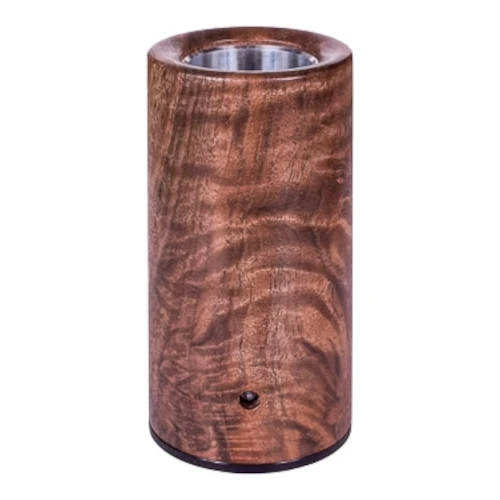
OG E-Nano
Epickai $200
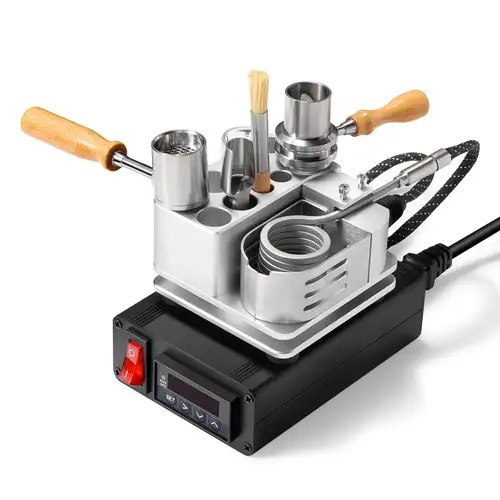
Ruby Wireless
SZ Crossing from $329.99
OG E-Nano and Ruby Wireless are both desktop / convection vaporizers, but they target different priorities. OG E-Nano is usually the lower-cost pick at $200, around $55 below Ruby Wireless. Session style, airflow, and extraction behavior will matter more than raw spec sheet numbers here.
Specs Compared
22
Different Specs
18
Shared Specs
4
Overall Overlap
18%
Shared Traits
A quick snapshot of the specs people usually care about first.
OG E-Nano
$200
Ruby Wireless
$255
OG E-Nano is typically around $55 lower.
OG E-Nano
Convection
Ruby Wireless
Convection
Both devices use a similar heating approach.
Top specs where these two devices diverge.
Price (USD)
OG E-Nano
$200
Ruby Wireless
$255
Temperature Range
OG E-Nano
0-560°F
Ruby Wireless
510F - 560F (Suggested)
Chamber Capacity
OG E-Nano
~0.25g
Ruby Wireless
Not specified
Power Adjustment
OG E-Nano
Rotary Knob
Ruby Wireless
Digital (precise)
Chamber Material
OG E-Nano
Glass
Ruby Wireless
Titanium
Brand
OG E-Nano
Epickai
Ruby Wireless
SZ Crossing
Typical price
$200
No stores listed yet
No discount code
Current price
$329.99
at The Stash Shack
Prices are read automatically from retailer pages and were last checked Oct 9, 2026; confirm the price at checkout. Some links are affiliate links, which support Thermal Extractions at no extra cost to you.
Direct comparison of every spec from each device profile.
| Specification | OG E-Nano | Ruby Wireless |
|---|---|---|
| Price (USD) | $200 | $255 |
| Device Type | Desktop | Desktop |
| Heating Type | Convection | Convection |
| Heat Up Time | 2 Minutes | — |
| Temperature Range | 0-560°F | 510F - 560F (Suggested) |
| Chamber Capacity | ~0.25g | Not specified |
| Battery Type | N/A | N/A |
| Charging | N/A | N/A |
| Dimensions | 95x51x51mm | — |
| Weight | ~113g | — |
| Power Adjustment | Rotary Knob | Digital (precise) |
| Chamber Material | Glass | Titanium |
| Brand | Epickai | SZ Crossing |
| Ball Type | — | 520 gem-cut rubies |
| Body Material | — | Titanium |
| Coil Size | — | 25mm coaxial |
| Country of Manufacture | United States (USA) | — |
| Joint Size | — | 14.4mm and 18.8mm male |
| Power | — | Classic PID controller with dock |
| Power Cable Length | 2.5 Metres | — |
| Power Source | AC Power (110v) | — |
| Warranty | 3 years | — |
There's no single headline gap. The differences are spread across 18 smaller spec rows rather than concentrated in one place. The spec table below marks each row that differs.
OG E-Nano is the cheaper option at $200 compared with $255 for the Ruby Wireless, about $55 less. Live retailer pricing can shift, so confirm before buying.
OG E-Nano controls heat with rotary knob, while the Ruby Wireless uses digital (precise). Ruby Wireless gives you finer per-degree control.
OG E-Nano lists a chamber capacity of ~0.25g; the Ruby Wireless lists Not specified.
OG E-Nano covers 0-560°F, a wider band than the Ruby Wireless at 510F - 560F (Suggested). A wider range gives you more room to dial in flavor at the low end and big clouds at the top.
OG E-Nano is the better fit for microdosing in our database, typically thanks to a smaller chamber, finer temperature control, or both.
Across the 22 specs we line up, they share 4 and differ on 18, an overlap of about 18%. The differences are concentrated in the areas the spec table highlights with a marker.
Jump into the comparison hub to pick any two devices and open a canonical side-by-side page.