Price (USD)
Ruby Twist edgeRuby Twist
$170
Ruby Wireless
$255
Ruby Twist is typically around $85 lower.
Vaporizer Comparison
Side-by-side specs, pricing context, and clear decision guidance.
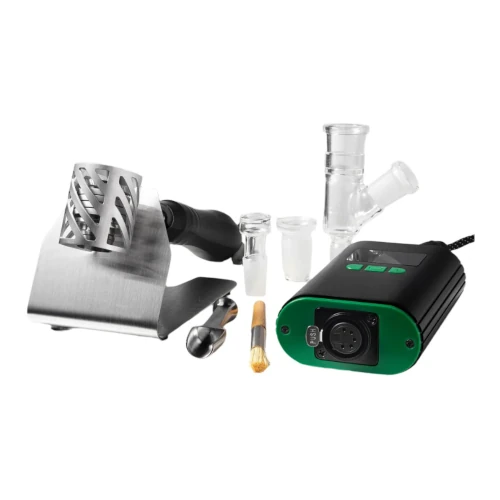
Ruby Twist
SZ Crossing from $199.99
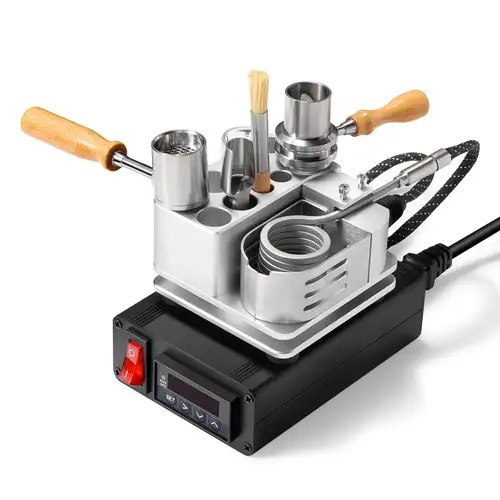
Ruby Wireless
SZ Crossing from $329.99
Ruby Twist and Ruby Wireless are both desktop / convection vaporizers, but they target different priorities. Ruby Twist is usually the lower-cost pick at $170, around $85 below Ruby Wireless. Session style, airflow, and extraction behavior will matter more than raw spec sheet numbers here.
Specs Compared
19
Different Specs
13
Shared Specs
6
Overall Overlap
32%
Shared Traits
A quick snapshot of the specs people usually care about first.
Ruby Twist
$170
Ruby Wireless
$255
Ruby Twist is typically around $85 lower.
Ruby Twist
Convection
Ruby Wireless
Convection
Both devices use a similar heating approach.
Top specs where these two devices diverge.
Price (USD)
Ruby Twist
$170
Ruby Wireless
$255
Temperature Range
Ruby Twist
450F - 650F (Recommended Range)
Ruby Wireless
510F - 560F (Suggested)
Chamber Capacity
Ruby Twist
0.05g - ~0.4g
Ruby Wireless
Not specified
Chamber Material
Ruby Twist
Glass
Ruby Wireless
Titanium
Ball Type
Ruby Twist
Gem-cut rubies
Ruby Wireless
520 gem-cut rubies
Body Material
Ruby Twist
Grade 2 Titanium
Ruby Wireless
Titanium
Coil Size
Ruby Twist
20mm
Ruby Wireless
25mm coaxial
Joint Size
Ruby Twist
14mm male (14-18mm adapter included)
Ruby Wireless
14.4mm and 18.8mm male
Current price
$199.99
at The Stash Shack
Current price
$329.99
at The Stash Shack
Prices are read automatically from retailer pages and were last checked Oct 9, 2026; confirm the price at checkout. Some links are affiliate links, which support Thermal Extractions at no extra cost to you.
Direct comparison of every spec from each device profile.
| Specification | Ruby Twist | Ruby Wireless |
|---|---|---|
| Price (USD) | $170 | $255 |
| Device Type | Desktop | Desktop |
| Heating Type | Convection | Convection |
| Temperature Range | 450F - 650F (Recommended Range) | 510F - 560F (Suggested) |
| Chamber Capacity | 0.05g - ~0.4g | Not specified |
| Battery Type | N/A | N/A |
| Charging | N/A | N/A |
| Dimensions | 72x36x108mm | — |
| Weight | 0.8kg | — |
| Power Adjustment | Digital (precise) | Digital (precise) |
| Chamber Material | Glass | Titanium |
| Brand | SZ Crossing | SZ Crossing |
| Adjustable Airflow | Yes | — |
| Ball Type | Gem-cut rubies | 520 gem-cut rubies |
| Body Material | Grade 2 Titanium | Titanium |
| Coil Size | 20mm | 25mm coaxial |
| Joint Size | 14mm male (14-18mm adapter included) | 14.4mm and 18.8mm male |
| Power | — | Classic PID controller with dock |
| Warranty | 1 year | — |
There's no single headline gap. The differences are spread across 13 smaller spec rows rather than concentrated in one place. The spec table below marks each row that differs.
Ruby Twist is the cheaper option at $170 compared with $255 for the Ruby Wireless, about $85 less. Live retailer pricing can shift, so confirm before buying.
Ruby Twist lists a chamber capacity of 0.05g - ~0.4g; the Ruby Wireless lists Not specified.
Ruby Twist covers 450F - 650F (Recommended Range), a wider band than the Ruby Wireless at 510F - 560F (Suggested). A wider range gives you more room to dial in flavor at the low end and big clouds at the top.
Yes, both are from SZ Crossing, which usually means similar build quality, support, and accessory ecosystems.
Across the 19 specs we line up, they share 6 and differ on 13, an overlap of about 32%. The differences are concentrated in the areas the spec table highlights with a marker.
Jump into the comparison hub to pick any two devices and open a canonical side-by-side page.