Price (USD)
Close callDr. Dabber Boost Evo
$240
PAX 3
$250
Pricing is very close between both devices.
Vaporizer Comparison
Side-by-side specs, pricing context, and clear decision guidance.
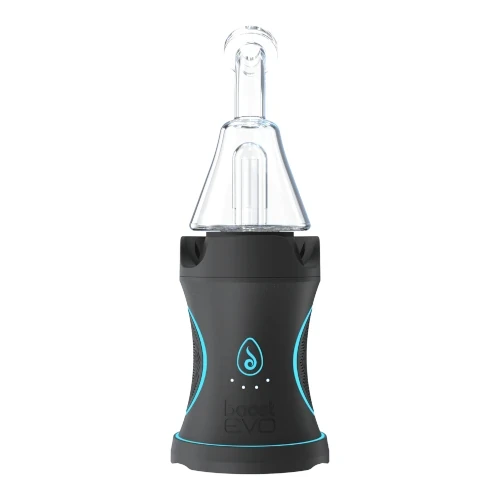
Dr. Dabber Boost Evo
Dr. Dabber from $417.99
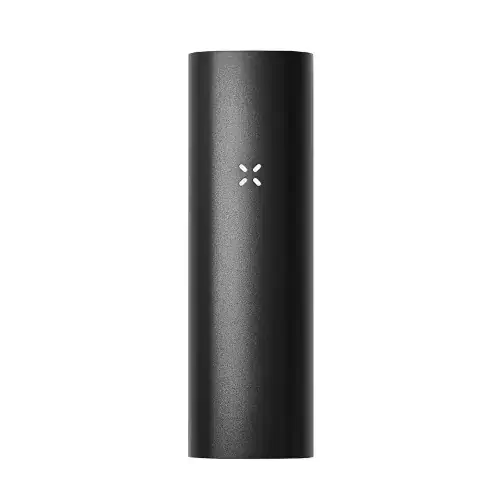
PAX 3
PAX Labs $250
Dr. Dabber Boost Evo and PAX 3 are both concentrates / conduction vaporizers, but they target different priorities. Their listed prices are close ($240 vs $250). Dr. Dabber Boost Evo has the quicker listed heat-up profile, which can matter for shorter sessions.
Specs Compared
24
Different Specs
22
Shared Specs
2
Overall Overlap
8%
Shared Traits
A quick snapshot of the specs people usually care about first.
Dr. Dabber Boost Evo
$240
PAX 3
$250
Pricing is very close between both devices.
Dr. Dabber Boost Evo
~11 Seconds
PAX 3
<30 seconds
Dr. Dabber Boost Evo has the quicker listed heat-up profile.
Dr. Dabber Boost Evo
2.8 oz
PAX 3
~93 grams
Dr. Dabber Boost Evo is the lighter listed unit.
Dr. Dabber Boost Evo
Conduction
PAX 3
Conduction
Both devices use a similar heating approach.
Top specs where these two devices diverge.
Price (USD)
Dr. Dabber Boost Evo
$240
PAX 3
$250
Device Type
Dr. Dabber Boost Evo
Desktop
PAX 3
Portable
Heat Up Time
Dr. Dabber Boost Evo
~11 Seconds
PAX 3
<30 seconds
Temperature Range
Dr. Dabber Boost Evo
500-750°F
PAX 3
182°C - 215°C (360°F - 420°F)
Battery Type
Dr. Dabber Boost Evo
Internal
PAX 3
Internal 18650
Battery Life
Dr. Dabber Boost Evo
40-60 heating cycles
PAX 3
~90 minutes
Charging
Dr. Dabber Boost Evo
USB-C
PAX 3
Proprietary Dock
Charge Time
Dr. Dabber Boost Evo
~1 hour
PAX 3
~90 minutes
Weight
Dr. Dabber Boost Evo
2.8 oz
PAX 3
~93 grams
Power Adjustment
Dr. Dabber Boost Evo
Modular - Six Stages
PAX 3
Modular - 4 stages
Current price
$417.99
at Mind Vapes
Typical price
$250
Prices vary by store
Prices are read automatically from retailer pages and were last checked Oct 2, 2026; confirm the price at checkout. Some links are affiliate links, which support Thermal Extractions at no extra cost to you.
Direct comparison of every spec from each device profile.
| Specification | Dr. Dabber Boost Evo | PAX 3 |
|---|---|---|
| Price (USD) | $240 | $250 |
| Device Type | Desktop | Portable |
| Heating Type | Conduction | Conduction |
| Heat Up Time | ~11 Seconds | <30 seconds |
| Temperature Range | 500-750°F | 182°C - 215°C (360°F - 420°F) |
| Chamber Capacity | — | 0.35 - 0.5 grams |
| Battery Type | Internal | Internal 18650 |
| Battery Capacity | — | 3500mAh |
| Battery Life | 40-60 heating cycles | ~90 minutes |
| Charging | USB-C | Proprietary Dock |
| Charge Time | ~1 hour | ~90 minutes |
| Pass-Through Charging | Yes | — |
| Bluetooth / App | — | Yes |
| Dimensions | — | 98mm x 31mm x 22mm |
| Height | 7.75 inches | — |
| Weight | 2.8 oz | ~93 grams |
| Power Adjustment | Modular - Six Stages | Modular - 4 stages |
| Chamber Material | Quartz | Stainless Steel |
| Concentrate Support | Yes | Yes |
| Brand | Dr. Dabber | PAX Labs |
| Adjustable Airflow | Yes | — |
| Diameter | 2.83 inches | — |
| Release Date | 2020 | 2016 |
| Warranty | 1 year | 10 years |
The biggest practical difference is form factor: these aren't the same kind of device. Dr. Dabber Boost Evo is a desktop, PAX 3 is a portable. Pick based on whether you want something portable or something stationary.
Dr. Dabber Boost Evo reaches session-ready temperature in ~11 Seconds, while the PAX 3 takes <30 seconds. That's roughly 19 seconds quicker on the Dr. Dabber Boost Evo, which is useful if you want shorter, on-demand sessions.
PAX 3 is the take-anywhere choice. It's a portable, battery-powered unit, while the Dr. Dabber Boost Evo is built for home use, where bigger heaters, AC power, and larger chambers make sense.
Listed prices are close: $240 for the Dr. Dabber Boost Evo versus $250 for the PAX 3. Day-to-day price will likely come down to whichever retailer is running a promotion.
Dr. Dabber Boost Evo fully charges in ~1 hour, ahead of ~90 minutes on the PAX 3.
PAX 3 is the better pick if low-profile use matters. It's tagged as stealth or pocket-friendly in our database, while the Dr. Dabber Boost Evo is more conspicuous in hand and harder to keep out of sight.
Dr. Dabber Boost Evo's spec sheet lists 40-60 heating cycles; the PAX 3 lists ~90 minutes. The two manufacturers measure battery life differently here, so direct comparison isn't straightforward.
Jump into the comparison hub to pick any two devices and open a canonical side-by-side page.