Price (USD)
Weecke Rush edgeAUXO Celsius
$250
Weecke Rush
$149
Weecke Rush is typically around $101 lower.
Vaporizer Comparison
Side-by-side specs, pricing context, and clear decision guidance.
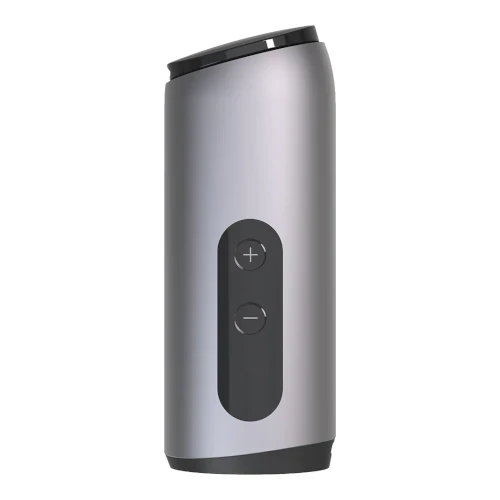
AUXO Celsius
AUXO $250
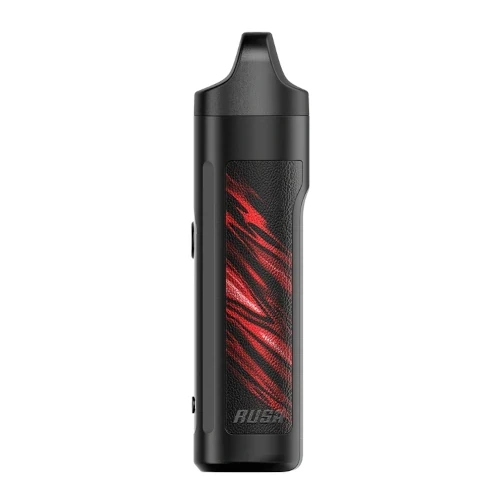
Weecke Rush
Weecke $149
AUXO Celsius and Weecke Rush are both portable / hybrid vaporizers, but they target different priorities. Weecke Rush is usually the lower-cost pick at $149, around $101 below AUXO Celsius. Heat-up speed is broadly similar between the two.
Specs Compared
26
Different Specs
21
Shared Specs
5
Overall Overlap
19%
Shared Traits
A quick snapshot of the specs people usually care about first.
AUXO Celsius
$250
Weecke Rush
$149
Weecke Rush is typically around $101 lower.
AUXO Celsius
6-30 seconds
Weecke Rush
~25 seconds
Both devices are in a similar heat-up range.
AUXO Celsius
Hybrid (Primarily Conduction)
Weecke Rush
Hybrid
Heating style differs, which can impact flavor and extraction behavior.
Top specs where these two devices diverge.
Price (USD)
AUXO Celsius
$250
Weecke Rush
$149
Heating Type
AUXO Celsius
Hybrid (Primarily Conduction)
Weecke Rush
Hybrid
Heat Up Time
AUXO Celsius
6-30 seconds
Weecke Rush
~25 seconds
Temperature Range
AUXO Celsius
284°F - 500°F (140°C - 260°C)
Weecke Rush
160°C - 240°C
Chamber Capacity
AUXO Celsius
0.3g dry herbs or 0.05g when using concentrates
Weecke Rush
~0.3 grams
Battery Type
AUXO Celsius
Lithium-ion
Weecke Rush
Internal
Battery Capacity
AUXO Celsius
1100mAh
Weecke Rush
2300mAh
Power Adjustment
AUXO Celsius
Modular - 4 Stages (and an app controlled custom mode)
Weecke Rush
Precision Digital - 1°C increments
Brand
AUXO Celsius
AUXO
Weecke Rush
Weecke
Release Date
AUXO Celsius
2023
Weecke Rush
2021
Typical price
$250
No stores listed yet
Typical price
$149
No stores listed yet
Direct comparison of every spec from each device profile.
| Specification | AUXO Celsius | Weecke Rush |
|---|---|---|
| Price (USD) | $250 | $149 |
| Device Type | Portable | Portable |
| Heating Type | Hybrid (Primarily Conduction) | Hybrid |
| Heat Up Time | 6-30 seconds | ~25 seconds |
| Temperature Range | 284°F - 500°F (140°C - 260°C) | 160°C - 240°C |
| Chamber Capacity | 0.3g dry herbs or 0.05g when using concentrates | ~0.3 grams |
| Battery Type | Lithium-ion | Internal |
| Battery Capacity | 1100mAh | 2300mAh |
| Battery Life | ~9 sessions | — |
| Charging | USB-C | USB-C |
| Charge Time | 1.5 hours | — |
| Bluetooth / App | Yes | — |
| Dimensions | 114.1x45.1x33.3mm | — |
| Weight | 157.8g | — |
| Power Adjustment | Modular - 4 Stages (and an app controlled custom mode) | Precision Digital - 1°C increments |
| Chamber Material | Stainless Steel | Stainless Steel |
| Concentrate Support | Yes | — |
| Brand | AUXO | Weecke |
| Body Material | Aluminum Alloy | — |
| Country of Manufacture | China | China |
| Haptic Feedback | Yes | — |
| Manufacturer | — | SOUTH REED TECHNOLOGY CO., LTD. |
| Mouthpiece Material | Zirconia | — |
| Release Date | 2023 | 2021 |
| Session Style | Session | Session |
| Warranty | 2 years (10 years under the 2023 manual) | — |
The biggest practical difference is price tier: the Weecke Rush sits at $149 while the AUXO Celsius is $250, a gap of about $101 that puts them in different buying brackets.
Weecke Rush is the cheaper option at $149 compared with $250 for the AUXO Celsius, about $101 less. Live retailer pricing can shift, so confirm before buying.
AUXO Celsius reaches session-ready temperature in 6-30 seconds, while the Weecke Rush takes ~25 seconds. That's roughly 7 seconds quicker on the AUXO Celsius, which is useful if you want shorter, on-demand sessions.
AUXO Celsius uses hybrid (primarily conduction) heating, while the Weecke Rush uses hybrid. Heating style influences flavor profile, vapor density, and how forgiving the device is to draw technique.
Weecke Rush has the larger chamber at ~0.3 grams, versus 0.3g dry herbs or 0.05g when using concentrates on the AUXO Celsius. A bigger bowl means fewer reloads on long sessions; a smaller one suits microdosing and quicker bowls.
AUXO Celsius is the better pick if low-profile use matters. It's tagged as stealth or pocket-friendly in our database, while the Weecke Rush is more conspicuous in hand and harder to keep out of sight.
Across the 26 specs we line up, they share 5 and differ on 21, an overlap of about 19%. The differences are concentrated in the areas the spec table highlights with a marker.
Jump into the comparison hub to pick any two devices and open a canonical side-by-side page.