Price (USD)
PAX Plus edgePAX Mini
$150
PAX Plus
$125
PAX Plus is typically around $25 lower.
Vaporizer Comparison
Side-by-side specs, pricing context, and clear decision guidance.
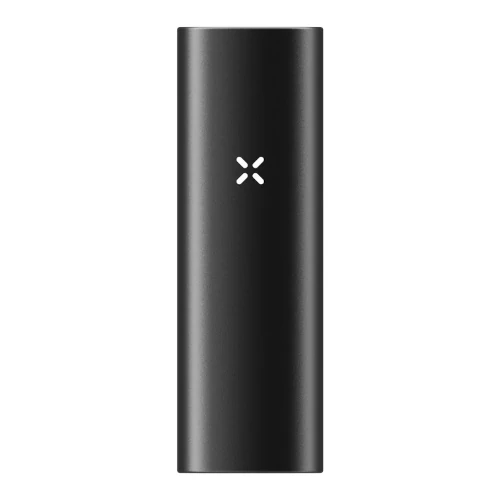
PAX Mini
PAX Labs from $95.95
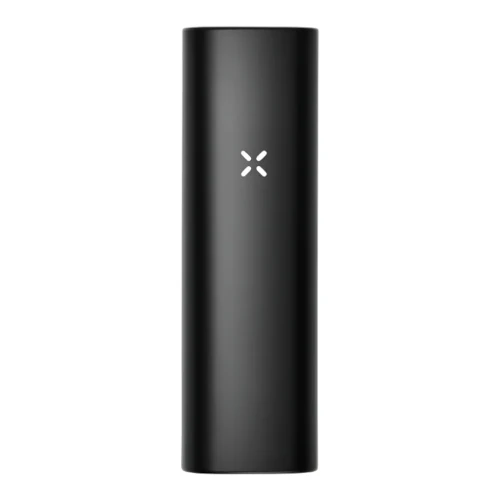
PAX Plus
PAX Labs from $159.95
PAX Mini and PAX Plus are both portable / conduction vaporizers, but they target different priorities. PAX Plus is usually the lower-cost pick at $125, around $25 below PAX Mini. PAX Mini has the quicker listed heat-up profile, which can matter for shorter sessions.
Specs Compared
20
Different Specs
15
Shared Specs
5
Overall Overlap
25%
Shared Traits
A quick snapshot of the specs people usually care about first.
PAX Mini
$150
PAX Plus
$125
PAX Plus is typically around $25 lower.
PAX Mini
22 seconds
PAX Plus
<30 seconds
PAX Mini has the quicker listed heat-up profile.
PAX Mini
89 grams
PAX Plus
91 grams
Weight is close enough that portability is likely similar.
PAX Mini
Conduction
PAX Plus
Conduction
Both devices use a similar heating approach.
Top specs where these two devices diverge.
Price (USD)
PAX Mini
$150
PAX Plus
$125
Heat Up Time
PAX Mini
22 seconds
PAX Plus
<30 seconds
Battery Life
PAX Mini
~60 minutes
PAX Plus
2+ hours
Charging
PAX Mini
USB-C, about 90 minutes
PAX Plus
Magnetic dock via USB, under ~120 minutes
Charge Time
PAX Mini
~1.5 hours
PAX Plus
2-3 hours
Dimensions
PAX Mini
93mm x 31mm x 22mm
PAX Plus
98mm x 31mm x 22mm
Weight
PAX Mini
89 grams
PAX Plus
91 grams
Power Adjustment
PAX Mini
Four heat modes (LED X)
PAX Plus
Stealth, Efficiency, Flavor, Boost modes
Release Date
PAX Mini
2025
PAX Plus
2022
Warranty
PAX Mini
2 years
PAX Plus
10 years
Lowest price
$95.95
at VPM
Lowest price
$159.95
at VPM
Prices are read automatically from retailer pages and were last checked Oct 9, 2026; confirm the price at checkout. Some links are affiliate links, which support Thermal Extractions at no extra cost to you.
Direct comparison of every spec from each device profile.
| Specification | PAX Mini | PAX Plus |
|---|---|---|
| Price (USD) | $150 | $125 |
| Device Type | Portable | Portable |
| Heating Type | Conduction | Conduction |
| Heat Up Time | 22 seconds | <30 seconds |
| Temperature Range | — | 360°F - 420°F |
| Chamber Capacity | 0.25g - 0.5g | 0.25g - 0.5g |
| Battery Type | — | Internal 18650 |
| Battery Capacity | — | 3300mAh (internal) |
| Battery Life | ~60 minutes | 2+ hours |
| Charging | USB-C, about 90 minutes | Magnetic dock via USB, under ~120 minutes |
| Charge Time | ~1.5 hours | 2-3 hours |
| Dimensions | 93mm x 31mm x 22mm | 98mm x 31mm x 22mm |
| Weight | 89 grams | 91 grams |
| Power Adjustment | Four heat modes (LED X) | Stealth, Efficiency, Flavor, Boost modes |
| Chamber Material | Stainless Steel | Stainless Steel |
| Concentrate Support | — | Supports concentrate insert (Complete Kit) |
| Brand | PAX Labs | PAX Labs |
| Release Date | 2025 | 2022 |
| Session Style | — | Session |
| Warranty | 2 years | 10 years |
There's no single headline gap. The differences are spread across 15 smaller spec rows rather than concentrated in one place. The spec table below marks each row that differs.
PAX Plus is the cheaper option at $125 compared with $150 for the PAX Mini, about $25 less. Live retailer pricing can shift, so confirm before buying.
PAX Mini reaches session-ready temperature in 22 seconds, while the PAX Plus takes <30 seconds. That's roughly 8 seconds quicker on the PAX Mini, which is useful if you want shorter, on-demand sessions.
PAX Plus is rated for 2+ hours, ahead of ~60 minutes on the PAX Mini. Real-world battery life depends on how high you set the temperature and how long sessions run.
PAX Mini fully charges in ~1.5 hours, ahead of 2-3 hours on the PAX Plus.
PAX Mini charges over USB-C; the PAX Plus uses a Magnetic dock via USB, under ~120 minutes port. USB-C means one fewer cable to keep around if your phone and laptop already use it.
Yes, both are from PAX Labs, which usually means similar build quality, support, and accessory ecosystems.
Jump into the comparison hub to pick any two devices and open a canonical side-by-side page.