Price (USD)
G Pen Roam edgeG Pen Roam
$100
Kind Pen TruVa Mini 2.0
$160
G Pen Roam is typically around $60 lower.
Vaporizer Comparison
Side-by-side specs, pricing context, and clear decision guidance.
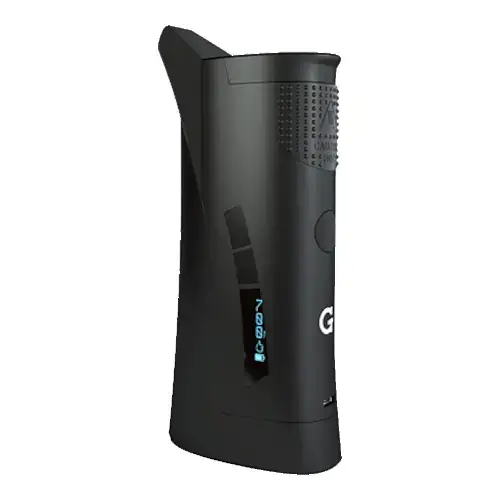
G Pen Roam
Grenco Science from $49.95
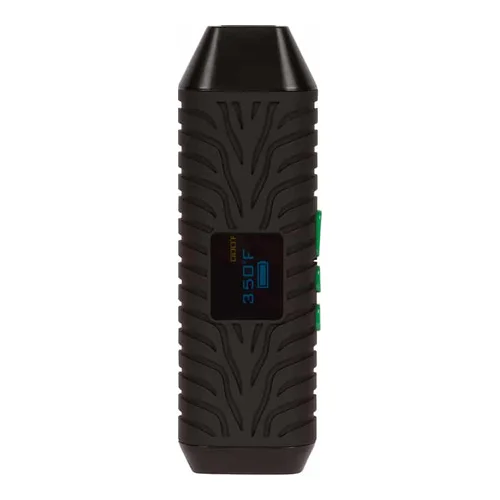
Kind Pen TruVa Mini 2.0
The Kind Pen $160
G Pen Roam and Kind Pen TruVa Mini 2.0 are both portable / electronic vaporizers, but they target different priorities. G Pen Roam is usually the lower-cost pick at $100, around $60 below Kind Pen TruVa Mini 2.0. G Pen Roam has the quicker listed heat-up profile, which can matter for shorter sessions.
Specs Compared
22
Different Specs
20
Shared Specs
2
Overall Overlap
9%
Shared Traits
A quick snapshot of the specs people usually care about first.
G Pen Roam
$100
Kind Pen TruVa Mini 2.0
$160
G Pen Roam is typically around $60 lower.
G Pen Roam
~5 seconds
Kind Pen TruVa Mini 2.0
~20 seconds
G Pen Roam has the quicker listed heat-up profile.
G Pen Roam
Conduction
Kind Pen TruVa Mini 2.0
Convection
Heating style differs, which can impact flavor and extraction behavior.
Top specs where these two devices diverge.
Price (USD)
G Pen Roam
$100
Kind Pen TruVa Mini 2.0
$160
Heating Type
G Pen Roam
Conduction
Kind Pen TruVa Mini 2.0
Convection
Heat Up Time
G Pen Roam
~5 seconds
Kind Pen TruVa Mini 2.0
~20 seconds
Temperature Range
G Pen Roam
204°C - 427°C (400°F - 800°F)
Kind Pen TruVa Mini 2.0
350-430°F
Battery Type
G Pen Roam
Internal
Kind Pen TruVa Mini 2.0
Built-in
Battery Capacity
G Pen Roam
1300mAh
Kind Pen TruVa Mini 2.0
2200mAh
Battery Life
G Pen Roam
15-20 sessions
Kind Pen TruVa Mini 2.0
8-10 sessions
Power Adjustment
G Pen Roam
Digital Control
Kind Pen TruVa Mini 2.0
Digital
Brand
G Pen Roam
Grenco Science
Kind Pen TruVa Mini 2.0
The Kind Pen
Display Type
G Pen Roam
LED
Kind Pen TruVa Mini 2.0
OLED
Current price
$49.95
at G Pen
Typical price
$160
Sold by The Kind Pen
No discount code
Prices are read automatically from retailer pages and were last checked Nov 17, 2026; confirm the price at checkout. Some links are affiliate links, which support Thermal Extractions at no extra cost to you.
Direct comparison of every spec from each device profile.
| Specification | G Pen Roam | Kind Pen TruVa Mini 2.0 |
|---|---|---|
| Price (USD) | $100 | $160 |
| Device Type | Portable | Portable |
| Heating Type | Conduction | Convection |
| Heat Up Time | ~5 seconds | ~20 seconds |
| Temperature Range | 204°C - 427°C (400°F - 800°F) | 350-430°F |
| Chamber Capacity | — | 0.3 grams |
| Battery Type | Internal | Built-in |
| Battery Capacity | 1300mAh | 2200mAh |
| Battery Life | 15-20 sessions | 8-10 sessions |
| Charging | Micro-USB | — |
| Charge Time | ~2 hours | — |
| Weight | ~317g | — |
| Power Adjustment | Digital Control | Digital |
| Chamber Material | Quartz | Quartz |
| Concentrate Support | Yes | — |
| Brand | Grenco Science | The Kind Pen |
| Adjustable Airflow | No | — |
| Body Material | — | Rubberized non-slip finish |
| Display Type | LED | OLED |
| Haptic Feedback | Yes | — |
| Release Date | 2020 | — |
| Warranty | 1 year | Lifetime |
The biggest practical difference is heating approach: G Pen Roam runs conduction while Kind Pen TruVa Mini 2.0 runs convection. That changes flavor delivery, vapor density, and how the device responds to slow versus fast draws.
G Pen Roam is the cheaper option at $100 compared with $160 for the Kind Pen TruVa Mini 2.0, about $60 less. Live retailer pricing can shift, so confirm before buying.
G Pen Roam reaches session-ready temperature in ~5 seconds, while the Kind Pen TruVa Mini 2.0 takes ~20 seconds. That's roughly 15 seconds quicker on the G Pen Roam, which is useful if you want shorter, on-demand sessions.
G Pen Roam uses conduction heating, while the Kind Pen TruVa Mini 2.0 uses convection. Heating style influences flavor profile, vapor density, and how forgiving the device is to draw technique.
G Pen Roam's spec sheet lists 15-20 sessions; the Kind Pen TruVa Mini 2.0 lists 8-10 sessions. The two manufacturers measure battery life differently here, so direct comparison isn't straightforward.
Across the 22 specs we line up, they share 2 and differ on 20, an overlap of about 9%. The differences are concentrated in the areas the spec table highlights with a marker.
Jump into the comparison hub to pick any two devices and open a canonical side-by-side page.