Price (USD)
Boundless CFV edgeBoundless CFV
$110
Kind Pen TruVa Mini 2.0
$160
Boundless CFV is typically around $50 lower.
Vaporizer Comparison
Side-by-side specs, pricing context, and clear decision guidance.
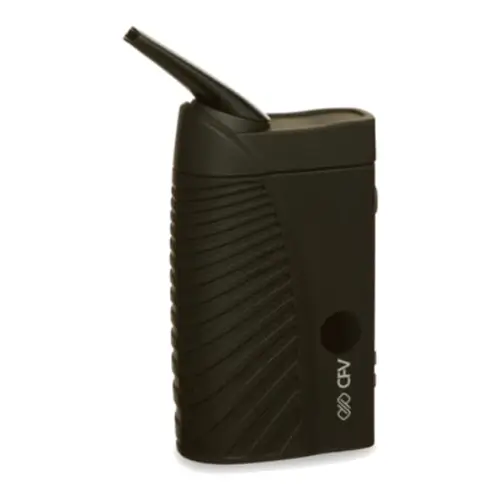
Boundless CFV
Boundless Technology $110
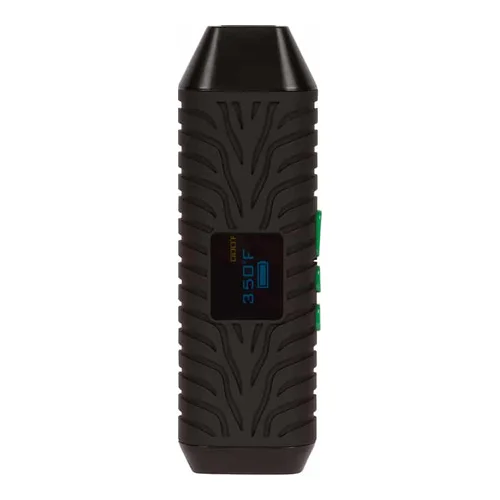
Kind Pen TruVa Mini 2.0
The Kind Pen $160
Boundless CFV and Kind Pen TruVa Mini 2.0 are both portable / convection vaporizers, but they target different priorities. Boundless CFV is usually the lower-cost pick at $110, around $50 below Kind Pen TruVa Mini 2.0. Kind Pen TruVa Mini 2.0 has the quicker listed heat-up profile, which can matter for shorter sessions.
Specs Compared
21
Different Specs
17
Shared Specs
4
Overall Overlap
19%
Shared Traits
A quick snapshot of the specs people usually care about first.
Boundless CFV
$110
Kind Pen TruVa Mini 2.0
$160
Boundless CFV is typically around $50 lower.
Boundless CFV
~30 seconds
Kind Pen TruVa Mini 2.0
~20 seconds
Kind Pen TruVa Mini 2.0 has the quicker listed heat-up profile.
Boundless CFV
Convection
Kind Pen TruVa Mini 2.0
Convection
Both devices use a similar heating approach.
Top specs where these two devices diverge.
Price (USD)
Boundless CFV
$110
Kind Pen TruVa Mini 2.0
$160
Heat Up Time
Boundless CFV
~30 seconds
Kind Pen TruVa Mini 2.0
~20 seconds
Temperature Range
Boundless CFV
60°C-230°C
Kind Pen TruVa Mini 2.0
350-430°F
Chamber Capacity
Boundless CFV
~0.5g
Kind Pen TruVa Mini 2.0
0.3 grams
Battery Type
Boundless CFV
Internal
Kind Pen TruVa Mini 2.0
Built-in
Battery Life
Boundless CFV
30-40 minutes
Kind Pen TruVa Mini 2.0
8-10 sessions
Chamber Material
Boundless CFV
Stainless Steel
Kind Pen TruVa Mini 2.0
Quartz
Brand
Boundless CFV
Boundless Technology
Kind Pen TruVa Mini 2.0
The Kind Pen
Warranty
Boundless CFV
3 years
Kind Pen TruVa Mini 2.0
Lifetime
Typical price
$110
Prices vary by store
Typical price
$160
Sold by The Kind Pen
No discount code
Prices are read automatically from retailer pages and were last checked Nov 17, 2026; confirm the price at checkout. Some links are affiliate links, which support Thermal Extractions at no extra cost to you.
Direct comparison of every spec from each device profile.
| Specification | Boundless CFV | Kind Pen TruVa Mini 2.0 |
|---|---|---|
| Price (USD) | $110 | $160 |
| Device Type | Portable | Portable |
| Heating Type | Convection | Convection |
| Heat Up Time | ~30 seconds | ~20 seconds |
| Temperature Range | 60°C-230°C | 350-430°F |
| Chamber Capacity | ~0.5g | 0.3 grams |
| Battery Type | Internal | Built-in |
| Battery Capacity | 2200MaH | 2200mAh |
| Battery Life | 30-40 minutes | 8-10 sessions |
| Charging | Micro USB | — |
| Charge Time | ~2.5 hours | — |
| Dimensions | 120x70x30mm | — |
| Power Adjustment | Digital | Digital |
| Chamber Material | Stainless Steel | Quartz |
| Brand | Boundless Technology | The Kind Pen |
| Body Material | — | Rubberized non-slip finish |
| Country of Manufacture | China | — |
| Display Type | — | OLED |
| Release Date | 2016 | — |
| Session Style | Session | — |
| Warranty | 3 years | Lifetime |
There's no single headline gap. The differences are spread across 17 smaller spec rows rather than concentrated in one place. The spec table below marks each row that differs.
Boundless CFV is the cheaper option at $110 compared with $160 for the Kind Pen TruVa Mini 2.0, about $50 less. Live retailer pricing can shift, so confirm before buying.
Kind Pen TruVa Mini 2.0 reaches session-ready temperature in ~20 seconds, while the Boundless CFV takes ~30 seconds. That's roughly 10 seconds quicker on the Kind Pen TruVa Mini 2.0, which is useful if you want shorter, on-demand sessions.
Boundless CFV has the larger chamber at ~0.5g, versus 0.3 grams on the Kind Pen TruVa Mini 2.0. A bigger bowl means fewer reloads on long sessions; a smaller one suits microdosing and quicker bowls.
Boundless CFV's spec sheet lists 30-40 minutes; the Kind Pen TruVa Mini 2.0 lists 8-10 sessions. The two manufacturers measure battery life differently here, so direct comparison isn't straightforward.
Across the 21 specs we line up, they share 4 and differ on 17, an overlap of about 19%. The differences are concentrated in the areas the spec table highlights with a marker.
Jump into the comparison hub to pick any two devices and open a canonical side-by-side page.