Price (USD)
FENiX Neo edgeFENiX Neo
$150
Transient Mist T Vibe
$215
FENiX Neo is typically around $65 lower.
Vaporizer Comparison
Side-by-side specs, pricing context, and clear decision guidance.
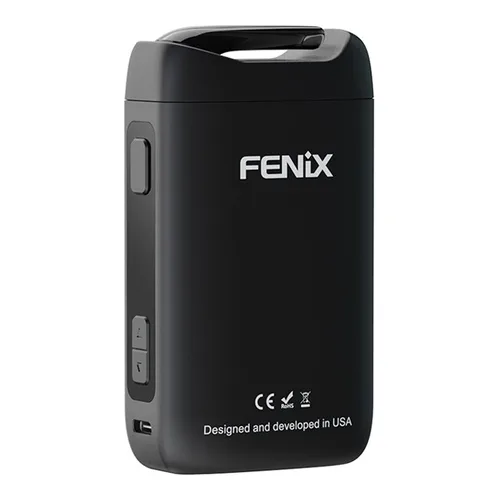
FENiX Neo
FENiX $150
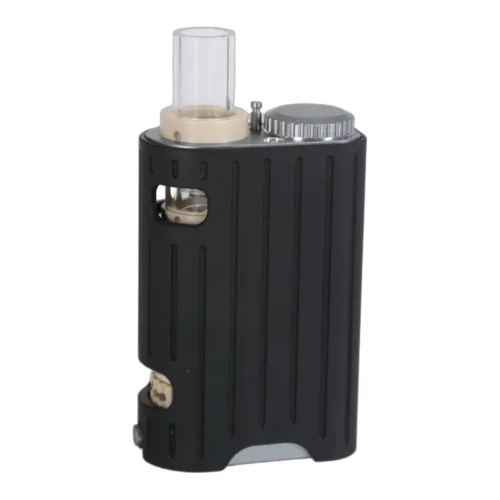
Transient Mist T Vibe
Transient Mist from A$228 AUD
FENiX Neo and Transient Mist T Vibe are both portable / convection vaporizers, but they target different priorities. FENiX Neo is usually the lower-cost pick at $150, around $65 below Transient Mist T Vibe. Transient Mist T Vibe has the quicker listed heat-up profile, which can matter for shorter sessions.
Specs Compared
30
Different Specs
26
Shared Specs
4
Overall Overlap
13%
Shared Traits
A quick snapshot of the specs people usually care about first.
FENiX Neo
$150
Transient Mist T Vibe
$215
FENiX Neo is typically around $65 lower.
FENiX Neo
Under 30 seconds
Transient Mist T Vibe
3-6 seconds to 200°C, under 2 seconds to reheat
Transient Mist T Vibe has the quicker listed heat-up profile.
FENiX Neo
216 grams
Transient Mist T Vibe
230g with battery
FENiX Neo is the lighter listed unit.
FENiX Neo
Convection
Transient Mist T Vibe
Convection
Both devices use a similar heating approach.
Top specs where these two devices diverge.
Price (USD)
FENiX Neo
$150
Transient Mist T Vibe
$215
Heat Up Time
FENiX Neo
Under 30 seconds
Transient Mist T Vibe
3-6 seconds to 200°C, under 2 seconds to reheat
Temperature Range
FENiX Neo
120°C - 221°C (248°F - 430°F)
Transient Mist T Vibe
40-240°C (104-464°F)
Battery Type
FENiX Neo
Internal
Transient Mist T Vibe
Removable 21700, rated 12C (40A) or higher
Battery Capacity
FENiX Neo
3000mAh
Transient Mist T Vibe
5000mAh Molicel P50B (battery version)
Charging
FENiX Neo
USB-C
Transient Mist T Vibe
USB-C, 5V/2A
Dimensions
FENiX Neo
104 x 58 x 28mm
Transient Mist T Vibe
95 x 32 x 59mm
Weight
FENiX Neo
216 grams
Transient Mist T Vibe
230g with battery
Power Adjustment
FENiX Neo
Digital (1 degree steps)
Transient Mist T Vibe
Digital, with an optional 5°C step mode
Brand
FENiX Neo
FENiX
Transient Mist T Vibe
Transient Mist
Typical price
$150
No stores listed yet
Current price
A$228
at Transient Mist
Prices are read automatically from retailer pages and were last checked Oct 9, 2026; confirm the price at checkout. Some links are affiliate links, which support Thermal Extractions at no extra cost to you.
Direct comparison of every spec from each device profile.
| Specification | FENiX Neo | Transient Mist T Vibe |
|---|---|---|
| Price (USD) | $150 | $215 |
| Device Type | Portable | Portable |
| Heating Type | Convection | Convection |
| Heat Up Time | Under 30 seconds | 3-6 seconds to 200°C, under 2 seconds to reheat |
| Temperature Range | 120°C - 221°C (248°F - 430°F) | 40-240°C (104-464°F) |
| Chamber Capacity | ~0.25g | — |
| Battery Type | Internal | Removable 21700, rated 12C (40A) or higher |
| Battery Capacity | 3000mAh | 5000mAh Molicel P50B (battery version) |
| Battery Life | ~8 to 12 sessions | — |
| Charging | USB-C | USB-C, 5V/2A |
| Charge Time | ~2 hours at 5V/2A | — |
| Pass-Through Charging | No | No |
| Dimensions | 104 x 58 x 28mm | 95 x 32 x 59mm |
| Weight | 216 grams | 230g with battery |
| Power Adjustment | Digital (1 degree steps) | Digital, with an optional 5°C step mode |
| Chamber Material | Titanium | — |
| Brand | FENiX | Transient Mist |
| Adjustable Airflow | — | Yes, stepless 2.2-6mm dial |
| Airpath | — | CNC-machined PEEK, separate from the electronics |
| Body Material | — | PC and PEEK (black) or PPSU and PEEK (translucent) |
| Country of Manufacture | China | — |
| Display Type | 0.78 inch dual OLED | 0.96-inch colour OLED |
| Haptic Feedback | Yes | Yes |
| Heating Element | — | 0.05mm SUS316L stainless steel foil, 10-turn cylinder |
| Manufacturer | Weecke (Shenzhen Jianan) | — |
| Release Date | 2024 | October 2026 |
| Session Style | Session | Session (up to 220°C, 100-500 second timer) and on-demand |
| Session Timer | 3 to 7 minutes (adjustable) | — |
| Warranty | 2 years | 2-year limited |
| Water Pipe Adapter | — | 14mm and 18mm included |
The biggest practical difference is heat-up speed: the Transient Mist T Vibe is ready in 3-6 seconds to 200°C, under 2 seconds to reheat versus Under 30 seconds on the FENiX Neo, which changes whether it feels on-demand or scheduled.
FENiX Neo is the cheaper option at $150 compared with $215 for the Transient Mist T Vibe, about $65 less. Live retailer pricing can shift, so confirm before buying.
Transient Mist T Vibe reaches session-ready temperature in 3-6 seconds to 200°C, under 2 seconds to reheat, while the FENiX Neo takes Under 30 seconds. That's roughly 26 seconds quicker on the Transient Mist T Vibe, which is useful if you want shorter, on-demand sessions.
Transient Mist T Vibe uses removable 21700, rated 12c (40a) or higher, so you can carry spares for back-to-back days. The FENiX Neo has a built-in battery you can't swap on the go.
Transient Mist T Vibe covers 40-240°C (104-464°F), a wider band than the FENiX Neo at 120°C - 221°C (248°F - 430°F). A wider range gives you more room to dial in flavor at the low end and big clouds at the top.
Across the 30 specs we line up, they share 4 and differ on 26, an overlap of about 13%. The differences are concentrated in the areas the spec table highlights with a marker.
Jump into the comparison hub to pick any two devices and open a canonical side-by-side page.