Price (USD)
Close call2-Con
$169
Linx Gaia
$160
Pricing is very close between both devices.
Vaporizer Comparison
Side-by-side specs, pricing context, and clear decision guidance.
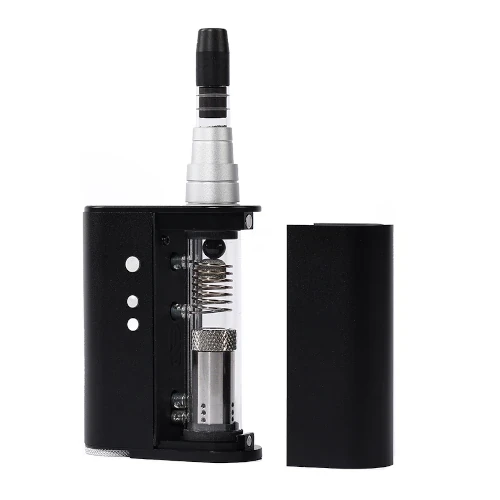
2-Con
End Game Labs $169
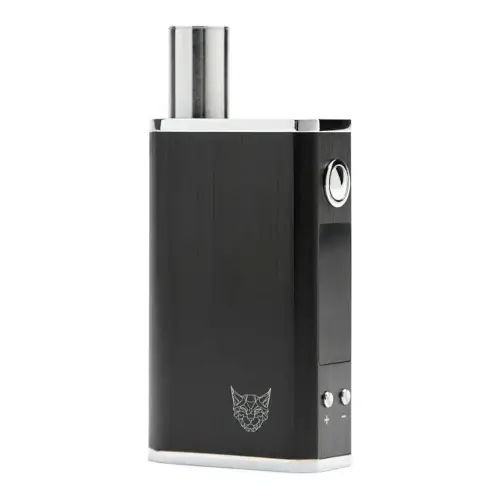
Linx Gaia
Linx Vapor $160
2-Con and Linx Gaia are both portable / budget vaporizers, but they target different priorities. Their listed prices are close ($169 vs $160). Session style, airflow, and extraction behavior will matter more than raw spec sheet numbers here.
Specs Compared
24
Different Specs
23
Shared Specs
1
Overall Overlap
4%
Shared Traits
A quick snapshot of the specs people usually care about first.
2-Con
$169
Linx Gaia
$160
Pricing is very close between both devices.
2-Con
Hybrid
Linx Gaia
Primarily Convection with some Conduction
Heating style differs, which can impact flavor and extraction behavior.
Top specs where these two devices diverge.
Price (USD)
2-Con
$169
Linx Gaia
$160
Heating Type
2-Con
Hybrid
Linx Gaia
Primarily Convection with some Conduction
Temperature Range
2-Con
32°F-455°F
Linx Gaia
93°C - 220°C (200°F-428°F)
Chamber Capacity
2-Con
up to 1g
Linx Gaia
0.25g
Battery Type
2-Con
Swappable 21700
Linx Gaia
Internal
Battery Capacity
2-Con
4000mAh
Linx Gaia
2200mAh
Charging
2-Con
USB-C
Linx Gaia
Micro USB
Power Adjustment
2-Con
Digital Control
Linx Gaia
Digital (precise)
Chamber Material
2-Con
Glass
Linx Gaia
Quartz
Brand
2-Con
End Game Labs
Linx Gaia
Linx Vapor
Typical price
$169
No stores listed yet
Typical price
$160
No stores listed yet
Direct comparison of every spec from each device profile.
| Specification | 2-Con | Linx Gaia |
|---|---|---|
| Price (USD) | $169 | $160 |
| Device Type | Portable | Portable |
| Heating Type | Hybrid | Primarily Convection with some Conduction |
| Heat Up Time | ~60 seconds | — |
| Temperature Range | 32°F-455°F | 93°C - 220°C (200°F-428°F) |
| Chamber Capacity | up to 1g | 0.25g |
| Battery Type | Swappable 21700 | Internal |
| Battery Capacity | 4000mAh | 2200mAh |
| Battery Life | — | ~2 hours |
| Charging | USB-C | Micro USB |
| Charge Time | — | 3 - 4 hours |
| Dimensions | — | 50 x 24 x 80mm |
| Weight | — | 146 grams |
| Power Adjustment | Digital Control | Digital (precise) |
| Chamber Material | Glass | Quartz |
| Brand | End Game Labs | Linx Vapor |
| Adjustable Airflow | — | No |
| Body Material | 6061 Aviation Aluminum Chasis | — |
| Display Type | — | OLED |
| Haptic Feedback | Yes | — |
| Joint Size | 14mm / 18mm | — |
| Release Date | 2023 | 2021 |
| Session Style | — | Session |
| Warranty | — | 1 year |
The biggest practical difference is heating approach: 2-Con runs hybrid while Linx Gaia runs primarily convection with some conduction. That changes flavor delivery, vapor density, and how the device responds to slow versus fast draws.
2-Con uses hybrid heating, while the Linx Gaia uses primarily convection with some conduction. Heating style influences flavor profile, vapor density, and how forgiving the device is to draw technique.
2-Con has the larger chamber at up to 1g, versus 0.25g on the Linx Gaia. A bigger bowl means fewer reloads on long sessions; a smaller one suits microdosing and quicker bowls.
Listed prices are close: $169 for the 2-Con versus $160 for the Linx Gaia. Day-to-day price will likely come down to whichever retailer is running a promotion.
2-Con uses swappable 21700, so you can carry spares for back-to-back days. The Linx Gaia has a built-in battery you can't swap on the go.
2-Con charges over USB-C; the Linx Gaia uses a Micro USB port. USB-C means one fewer cable to keep around if your phone and laptop already use it.
Jump into the comparison hub to pick any two devices and open a canonical side-by-side page.