Price (USD)
NXT E-Nano edgeDr. Dabber Boost Evo
$240
NXT E-Nano
$210
NXT E-Nano is typically around $30 lower.
Vaporizer Comparison
Side-by-side specs, pricing context, and clear decision guidance.
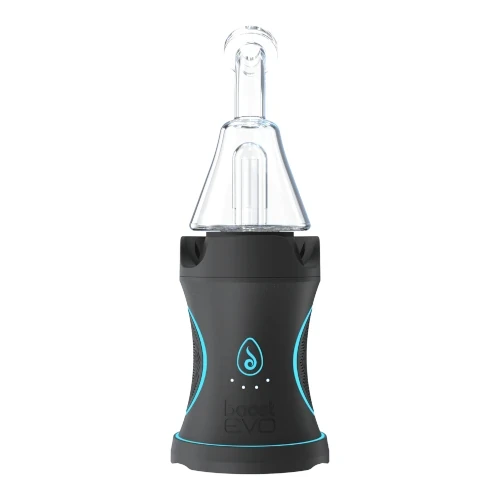
Dr. Dabber Boost Evo
Dr. Dabber from $417.99
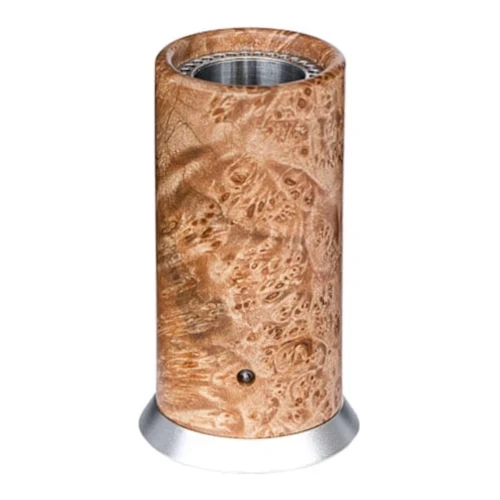
NXT E-Nano
Epickai $210
Dr. Dabber Boost Evo and NXT E-Nano are both desktop / premium vaporizers, but they target different priorities. NXT E-Nano is usually the lower-cost pick at $210, around $30 below Dr. Dabber Boost Evo. Dr. Dabber Boost Evo has the quicker listed heat-up profile, which can matter for shorter sessions.
Specs Compared
25
Different Specs
24
Shared Specs
1
Overall Overlap
4%
Shared Traits
A quick snapshot of the specs people usually care about first.
Dr. Dabber Boost Evo
$240
NXT E-Nano
$210
NXT E-Nano is typically around $30 lower.
Dr. Dabber Boost Evo
~11 Seconds
NXT E-Nano
2 Minutes
Dr. Dabber Boost Evo has the quicker listed heat-up profile.
Dr. Dabber Boost Evo
2.8 oz
NXT E-Nano
~125g
Dr. Dabber Boost Evo is the lighter listed unit.
Dr. Dabber Boost Evo
Conduction
NXT E-Nano
Convection
Heating style differs, which can impact flavor and extraction behavior.
Top specs where these two devices diverge.
Price (USD)
Dr. Dabber Boost Evo
$240
NXT E-Nano
$210
Heating Type
Dr. Dabber Boost Evo
Conduction
NXT E-Nano
Convection
Heat Up Time
Dr. Dabber Boost Evo
~11 Seconds
NXT E-Nano
2 Minutes
Temperature Range
Dr. Dabber Boost Evo
500-750°F
NXT E-Nano
0-560°F
Battery Type
Dr. Dabber Boost Evo
Internal
NXT E-Nano
N/A
Charging
Dr. Dabber Boost Evo
USB-C
NXT E-Nano
N/A
Weight
Dr. Dabber Boost Evo
2.8 oz
NXT E-Nano
~125g
Power Adjustment
Dr. Dabber Boost Evo
Modular - Six Stages
NXT E-Nano
Rotary Knob
Chamber Material
Dr. Dabber Boost Evo
Quartz
NXT E-Nano
Glass
Brand
Dr. Dabber Boost Evo
Dr. Dabber
NXT E-Nano
Epickai
Current price
$417.99
at Mind Vapes
Typical price
$210
No stores listed yet
Prices are read automatically from retailer pages and were last checked Oct 2, 2026; confirm the price at checkout. Some links are affiliate links, which support Thermal Extractions at no extra cost to you.
Direct comparison of every spec from each device profile.
| Specification | Dr. Dabber Boost Evo | NXT E-Nano |
|---|---|---|
| Price (USD) | $240 | $210 |
| Device Type | Desktop | Desktop |
| Heating Type | Conduction | Convection |
| Heat Up Time | ~11 Seconds | 2 Minutes |
| Temperature Range | 500-750°F | 0-560°F |
| Chamber Capacity | — | 0.02g - 0.25g |
| Battery Type | Internal | N/A |
| Battery Life | 40-60 heating cycles | — |
| Charging | USB-C | N/A |
| Charge Time | ~1 hour | — |
| Pass-Through Charging | Yes | — |
| Dimensions | — | 95x51x51mm |
| Height | 7.75 inches | — |
| Weight | 2.8 oz | ~125g |
| Power Adjustment | Modular - Six Stages | Rotary Knob |
| Chamber Material | Quartz | Glass |
| Concentrate Support | Yes | — |
| Brand | Dr. Dabber | Epickai |
| Adjustable Airflow | Yes | — |
| Country of Manufacture | — | United States (USA) |
| Diameter | 2.83 inches | — |
| Power Cable Length | — | 2.5 Metres |
| Power Source | — | AC Power (110v) |
| Release Date | 2020 | — |
| Warranty | 1 year | 3 years |
The biggest practical difference is heating approach: Dr. Dabber Boost Evo runs conduction while NXT E-Nano runs convection. That changes flavor delivery, vapor density, and how the device responds to slow versus fast draws.
NXT E-Nano is the cheaper option at $210 compared with $240 for the Dr. Dabber Boost Evo, about $30 less. Live retailer pricing can shift, so confirm before buying.
Dr. Dabber Boost Evo reaches session-ready temperature in ~11 Seconds, while the NXT E-Nano takes 2 Minutes. That's roughly 109 seconds quicker on the Dr. Dabber Boost Evo, which is useful if you want shorter, on-demand sessions.
Dr. Dabber Boost Evo uses conduction heating, while the NXT E-Nano uses convection. Heating style influences flavor profile, vapor density, and how forgiving the device is to draw technique.
Dr. Dabber Boost Evo is the lighter unit at 2.8 oz, around 46g less than the NXT E-Nano at ~125g. The lighter device is easier to carry and pocket day-to-day.
NXT E-Nano covers 0-560°F, a wider band than the Dr. Dabber Boost Evo at 500-750°F. A wider range gives you more room to dial in flavor at the low end and big clouds at the top.
NXT E-Nano is the better fit for microdosing in our database, typically thanks to a smaller chamber, finer temperature control, or both.
Jump into the comparison hub to pick any two devices and open a canonical side-by-side page.