Price (USD)
Kind Pen Nexus edgeDitanium
$299
Kind Pen Nexus
$100
Kind Pen Nexus is typically around $199 lower.
Vaporizer Comparison
Side-by-side specs, pricing context, and clear decision guidance.
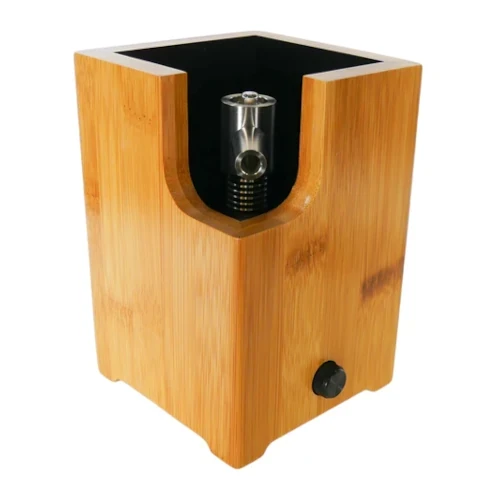
Ditanium
Ditanium $299
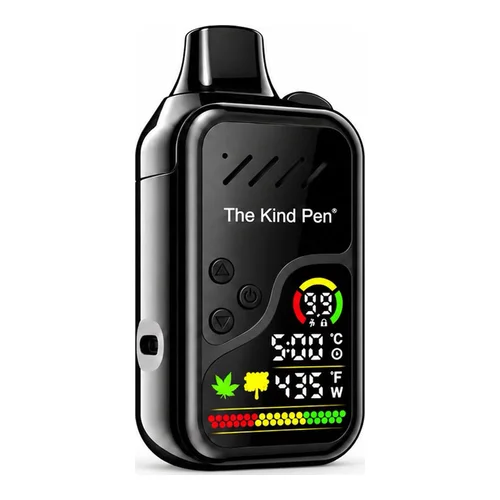
Kind Pen Nexus
The Kind Pen $100
Ditanium and Kind Pen Nexus are both convection / electronic vaporizers, but they target different priorities. Kind Pen Nexus is usually the lower-cost pick at $100, around $199 below Ditanium. Session style, airflow, and extraction behavior will matter more than raw spec sheet numbers here.
Specs Compared
27
Different Specs
25
Shared Specs
2
Overall Overlap
7%
Shared Traits
A quick snapshot of the specs people usually care about first.
Ditanium
$299
Kind Pen Nexus
$100
Kind Pen Nexus is typically around $199 lower.
Ditanium
~30 Seconds
Kind Pen Nexus
Under a minute to 435°F
The listed heat-up figures are not directly comparable.
Ditanium
Convection
Kind Pen Nexus
Convection
Both devices use a similar heating approach.
Top specs where these two devices diverge.
Price (USD)
Ditanium
$299
Kind Pen Nexus
$100
Device Type
Ditanium
Desktop
Kind Pen Nexus
Portable
Heat Up Time
Ditanium
~30 Seconds
Kind Pen Nexus
Under a minute to 435°F
Temperature Range
Ditanium
0 - 900°F
Kind Pen Nexus
300-435°F, wax mode 5-12W
Battery Type
Ditanium
N/A
Kind Pen Nexus
Built-in
Charging
Ditanium
N/A
Kind Pen Nexus
USB-C
Power Adjustment
Ditanium
Single Dial
Kind Pen Nexus
Digital, 1° steps
Chamber Material
Ditanium
Glass
Kind Pen Nexus
Ceramic (herb), quartz (wax)
Concentrate Support
Ditanium
Yes
Kind Pen Nexus
Yes, quartz wax chamber sold separately
Brand
Ditanium
Ditanium
Kind Pen Nexus
The Kind Pen
Typical price
$299
No stores listed yet
Typical price
$100
Sold by The Kind Pen
Prices are read automatically from retailer pages; confirm the price at checkout. Some links are affiliate links, which support Thermal Extractions at no extra cost to you.
Direct comparison of every spec from each device profile.
| Specification | Ditanium | Kind Pen Nexus |
|---|---|---|
| Price (USD) | $299 | $100 |
| Device Type | Desktop | Portable |
| Heating Type | Convection | Convection |
| Heat Up Time | ~30 Seconds | Under a minute to 435°F |
| Temperature Range | 0 - 900°F | 300-435°F, wax mode 5-12W |
| Chamber Capacity | ~0.5 grams | 0.5 grams |
| Battery Type | N/A | Built-in |
| Battery Capacity | — | 1000mAh |
| Battery Life | — | 4-5 herb or 5-6 wax sessions |
| Charging | N/A | USB-C |
| Charge Time | — | ~2 hours |
| Pass-Through Charging | — | No |
| Dimensions | — | 89 x 44 x 25mm |
| Height | 5.75 inches | — |
| Weight | — | 75g |
| Power Adjustment | Single Dial | Digital, 1° steps |
| Chamber Material | Glass | Ceramic (herb), quartz (wax) |
| Concentrate Support | Yes | Yes, quartz wax chamber sold separately |
| Brand | Ditanium | The Kind Pen |
| Body Material | Hardwood - Various Types Available | — |
| Country of Manufacture | United States (USA) | — |
| Display Type | — | Colour screen |
| Haptic Feedback | — | Yes |
| Release Date | — | 2026 |
| Session Style | — | Session, 3 or 5 minutes |
| Warranty | 2 years | Lifetime |
| Water Pipe Adapter | — | 14mm downstem included |
The biggest practical difference is price tier: the Kind Pen Nexus sits at $100 while the Ditanium is $299, a gap of about $199 that puts them in different buying brackets.
Kind Pen Nexus is the cheaper option at $100 compared with $299 for the Ditanium, about $199 less. Live retailer pricing can shift, so confirm before buying.
Kind Pen Nexus is the take-anywhere choice. It's a portable, battery-powered unit, while the Ditanium is built for home use, where bigger heaters, AC power, and larger chambers make sense.
Ditanium controls heat with single dial, while the Kind Pen Nexus uses digital, 1° steps. Kind Pen Nexus gives you finer per-degree control.
Ditanium covers 0 - 900°F, a wider band than the Kind Pen Nexus at 300-435°F, wax mode 5-12W. A wider range gives you more room to dial in flavor at the low end and big clouds at the top.
Both devices support concentrate use, typically via an included or aftermarket pad or insert. Check the manual for the recommended approach for each.
Across the 27 specs we line up, they share 2 and differ on 25, an overlap of about 7%. The differences are concentrated in the areas the spec table highlights with a marker.
Jump into the comparison hub to pick any two devices and open a canonical side-by-side page.