Price (USD)
ELEV8R edgeAUXO Cenote
$400
ELEV8R
$120
ELEV8R is typically around $280 lower.
Vaporizer Comparison
Side-by-side specs, pricing context, and clear decision guidance.
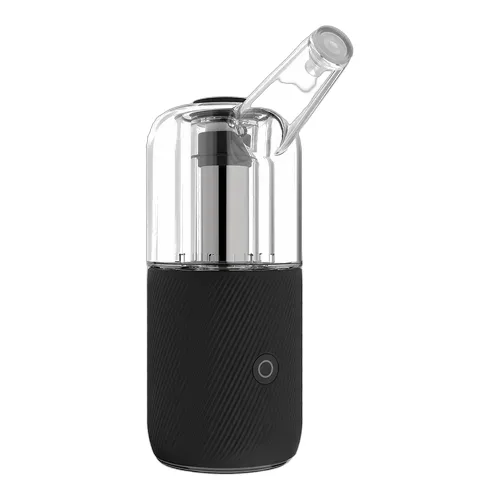
AUXO Cenote
AUXO $400
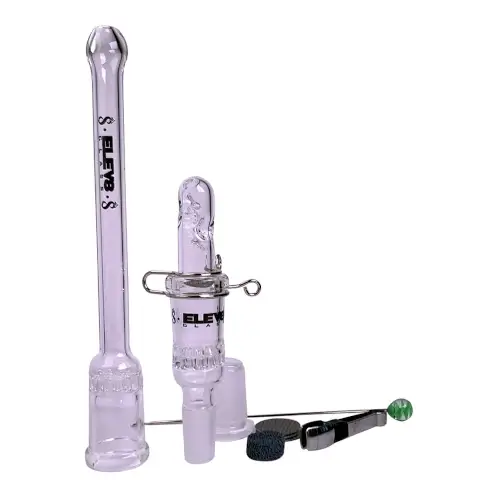
ELEV8R
7th Floor Vapes $120
AUXO Cenote and ELEV8R are both portable / concentrates vaporizers, but they target different priorities. ELEV8R is usually the lower-cost pick at $120, around $280 below AUXO Cenote. Session style, airflow, and extraction behavior will matter more than raw spec sheet numbers here.
Specs Compared
27
Different Specs
25
Shared Specs
2
Overall Overlap
7%
Shared Traits
A quick snapshot of the specs people usually care about first.
AUXO Cenote
$400
ELEV8R
$120
ELEV8R is typically around $280 lower.
AUXO Cenote
~28 seconds
ELEV8R
Dependent on torch or heater
Both devices are in a similar heat-up range.
AUXO Cenote
Conduction
ELEV8R
Convection
Heating style differs, which can impact flavor and extraction behavior.
Top specs where these two devices diverge.
Price (USD)
AUXO Cenote
$400
ELEV8R
$120
Heating Type
AUXO Cenote
Conduction
ELEV8R
Convection
Heat Up Time
AUXO Cenote
~28 seconds
ELEV8R
Dependent on torch or heater
Temperature Range
AUXO Cenote
200-340°C (392-644°F)
ELEV8R
N/A
Battery Type
AUXO Cenote
Lithium (internal)
ELEV8R
None
Battery Capacity
AUXO Cenote
2000mAh / 7.4V
ELEV8R
N/A
Battery Life
AUXO Cenote
12 sessions per charge (100 second sessions)
ELEV8R
N/A
Charging
AUXO Cenote
USB-C, plus Qi wireless charging
ELEV8R
N/A
Charge Time
AUXO Cenote
~90 minutes with the 20W adapter
ELEV8R
N/A
Power Adjustment
AUXO Cenote
3 device presets plus app controlled Pro Mode
ELEV8R
Manual
Typical price
$400
Prices vary by store
Typical price
$120
No stores listed yet
No discount code
Prices are read automatically from retailer pages and were last checked Oct 9, 2026; confirm the price at checkout. Some links are affiliate links, which support Thermal Extractions at no extra cost to you.
Direct comparison of every spec from each device profile.
| Specification | AUXO Cenote | ELEV8R |
|---|---|---|
| Price (USD) | $400 | $120 |
| Device Type | Portable | Portable |
| Heating Type | Conduction | Convection |
| Heat Up Time | ~28 seconds | Dependent on torch or heater |
| Temperature Range | 200-340°C (392-644°F) | N/A |
| Chamber Capacity | — | ~0.5 grams |
| Battery Type | Lithium (internal) | None |
| Battery Capacity | 2000mAh / 7.4V | N/A |
| Battery Life | 12 sessions per charge (100 second sessions) | N/A |
| Charging | USB-C, plus Qi wireless charging | N/A |
| Charge Time | ~90 minutes with the 20W adapter | N/A |
| Pass-Through Charging | No | — |
| Dimensions | 143 x 95 x 56mm | — |
| Weight | 320.5g | — |
| Power Adjustment | 3 device presets plus app controlled Pro Mode | Manual |
| Chamber Material | Aluminium oxide ceramic (disposable nail) | Glass |
| Concentrate Support | Yes | Yes |
| Brand | AUXO | 7th Floor Vapes |
| App Control | Yes (AUXO Connect on Android, All-On Browser on iOS) | — |
| Country of Manufacture | — | United States (USA) |
| Display Type | None (LED light indication) | — |
| Haptic Feedback | Yes | — |
| Heating Rod Material | Stainless steel | — |
| Release Date | 2022 | — |
| Session Style | Session (20 to 90 seconds) | — |
| Warranty | 2 years on the Cenote base | 30 days |
| Water Filtration | Hand blown borosilicate glass recycler | — |
The biggest practical difference is price tier: the ELEV8R sits at $120 while the AUXO Cenote is $400, a gap of about $280 that puts them in different buying brackets.
ELEV8R is the cheaper option at $120 compared with $400 for the AUXO Cenote, about $280 less. Live retailer pricing can shift, so confirm before buying.
AUXO Cenote uses conduction heating, while the ELEV8R uses convection. Heating style influences flavor profile, vapor density, and how forgiving the device is to draw technique.
AUXO Cenote controls heat with 3 device presets plus app controlled pro mode, while the ELEV8R uses manual. AUXO Cenote gives you finer per-degree control.
AUXO Cenote's spec sheet lists 12 sessions per charge (100 second sessions); the ELEV8R lists N/A. The two manufacturers measure battery life differently here, so direct comparison isn't straightforward.
Both devices support concentrate use, typically via an included or aftermarket pad or insert. Check the manual for the recommended approach for each.
Across the 27 specs we line up, they share 2 and differ on 25, an overlap of about 7%. The differences are concentrated in the areas the spec table highlights with a marker.
Jump into the comparison hub to pick any two devices and open a canonical side-by-side page.