Price (USD)
IO Hornet edgeAromed 4.0
$400
IO Hornet
$260
IO Hornet is typically around $140 lower.
Vaporizer Comparison
Side-by-side specs, pricing context, and clear decision guidance.
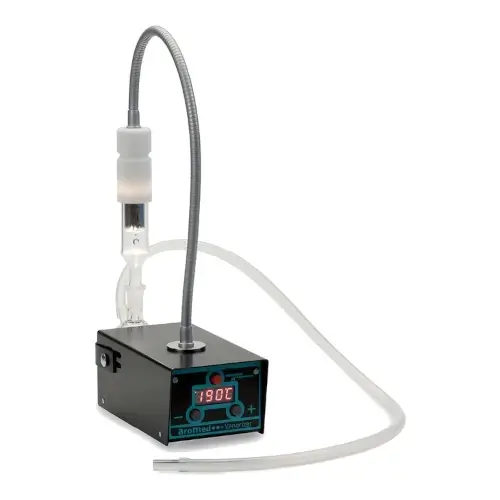
Aromed 4.0
AroMed HQ-Vaporizer $400
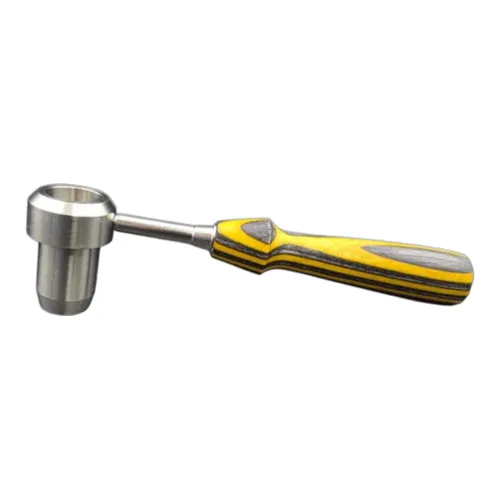
IO Hornet
IO MFG $260
Aromed 4.0 and IO Hornet are both desktop / convection vaporizers, but they target different priorities. IO Hornet is usually the lower-cost pick at $260, around $140 below Aromed 4.0. Session style, airflow, and extraction behavior will matter more than raw spec sheet numbers here.
Specs Compared
22
Different Specs
20
Shared Specs
2
Overall Overlap
9%
Shared Traits
A quick snapshot of the specs people usually care about first.
Aromed 4.0
$400
IO Hornet
$260
IO Hornet is typically around $140 lower.
Aromed 4.0
Convection
IO Hornet
Convection as an injector, hybrid with conduction as a diffuser
Heating style differs, which can impact flavor and extraction behavior.
Top specs where these two devices diverge.
Price (USD)
Aromed 4.0
$400
IO Hornet
$260
Heating Type
Aromed 4.0
Convection
IO Hornet
Convection as an injector, hybrid with conduction as a diffuser
Temperature Range
Aromed 4.0
60°C - 235°C (140°F - 455°F)
IO Hornet
271-338°C (520-640°F) recommended by IO MFG
Battery Type
Aromed 4.0
N/A
IO Hornet
None
Charging
Aromed 4.0
N/A
IO Hornet
None
Power Adjustment
Aromed 4.0
Digital Control
IO Hornet
Set on a separate PID controller, included only in the Complete Kit
Chamber Material
Aromed 4.0
Glass
IO Hornet
316L stainless steel with a Bocote wood handle
Brand
Aromed 4.0
AroMed HQ-Vaporizer
IO Hornet
IO MFG
Typical price
$400
No stores listed yet
Typical price
$260
No stores listed yet
Direct comparison of every spec from each device profile.
| Specification | Aromed 4.0 | IO Hornet |
|---|---|---|
| Price (USD) | $400 | $260 |
| Device Type | Desktop | Desktop |
| Heating Type | Convection | Convection as an injector, hybrid with conduction as a diffuser |
| Heat Up Time | — | 3-5 minutes on a 16mm coil, longer on 20mm and 25mm adapters |
| Temperature Range | 60°C - 235°C (140°F - 455°F) | 271-338°C (520-640°F) recommended by IO MFG |
| Chamber Capacity | — | 0.08g to about 0.2g, around 0.15g for a full draw |
| Battery Type | N/A | None |
| Charging | N/A | None |
| Power Adjustment | Digital Control | Set on a separate PID controller, included only in the Complete Kit |
| Chamber Material | Glass | 316L stainless steel with a Bocote wood handle |
| Concentrate Support | — | Suited to traditional hash, not built for wax or oil |
| Brand | AroMed HQ-Vaporizer | IO MFG |
| Ball Type | — | 100 x 2.5mm lab grown ruby balls |
| Bowl Compatibility | — | Classic DynaVap tips, IO conduction and glass bowls, many third party 14mm bowls |
| Coil Size | — | 16mm, with adapters for 20mm and 25mm coils |
| Country of Manufacture | Germany | — |
| Heating Element | Halogen Bulb | — |
| Joint Size | — | 14mm bowls included, 10mm and 14mm diffusers, 14mm and 22mm injectors |
| Manufacturer | — | IO MFG LLC |
| Release Date | — | 2024 |
| Session Style | On-Demand | On-Demand |
| Warranty | — | None, IO MFG sells the Hornet as is with no express or implied warranty |
The biggest practical difference is price tier: the IO Hornet sits at $260 while the Aromed 4.0 is $400, a gap of about $140 that puts them in different buying brackets.
IO Hornet is the cheaper option at $260 compared with $400 for the Aromed 4.0, about $140 less. Live retailer pricing can shift, so confirm before buying.
Aromed 4.0 uses convection heating, while the IO Hornet uses convection as an injector, hybrid with conduction as a diffuser. Heating style influences flavor profile, vapor density, and how forgiving the device is to draw technique.
Aromed 4.0 controls heat with digital control, while the IO Hornet uses set on a separate pid controller, included only in the complete kit. Aromed 4.0 gives you finer per-degree control.
Aromed 4.0 covers 60°C - 235°C (140°F - 455°F), a wider band than the IO Hornet at 271-338°C (520-640°F) recommended by IO MFG. A wider range gives you more room to dial in flavor at the low end and big clouds at the top.
IO Hornet is the better fit for microdosing in our database, typically thanks to a smaller chamber, finer temperature control, or both.
Across the 22 specs we line up, they share 2 and differ on 20, an overlap of about 9%. The differences are concentrated in the areas the spec table highlights with a marker.
Jump into the comparison hub to pick any two devices and open a canonical side-by-side page.