Price (USD)
NXT E-Nano edgeNXT E-Nano
$210
The Coma
$588
NXT E-Nano is typically around $378 lower.
Vaporizer Comparison
Side-by-side specs, pricing context, and clear decision guidance.
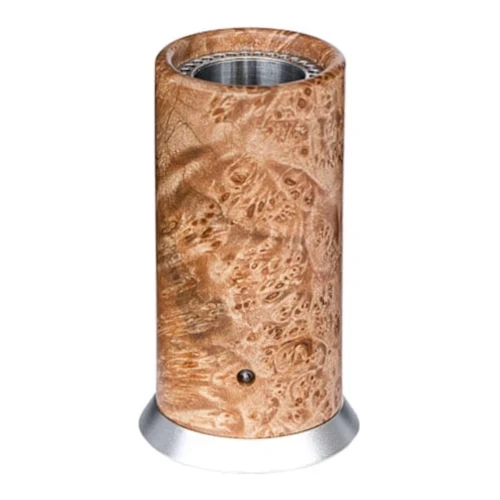
NXT E-Nano
Epickai $210
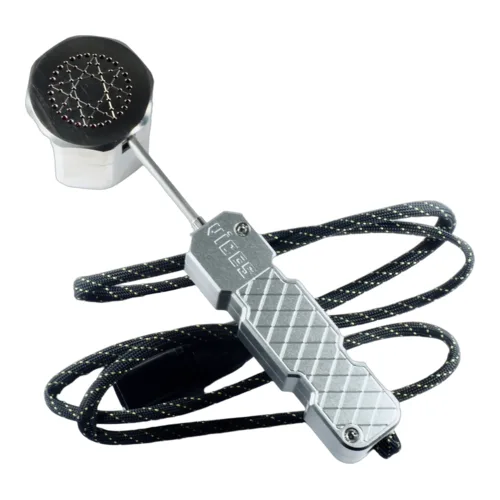
The Coma
Vices $588
NXT E-Nano and The Coma are both desktop / convection vaporizers, but they target different priorities. NXT E-Nano is usually the lower-cost pick at $210, around $378 below The Coma. Session style, airflow, and extraction behavior will matter more than raw spec sheet numbers here.
Specs Compared
26
Different Specs
24
Shared Specs
2
Overall Overlap
8%
Shared Traits
A quick snapshot of the specs people usually care about first.
NXT E-Nano
$210
The Coma
$588
NXT E-Nano is typically around $378 lower.
NXT E-Nano
Convection
The Coma
Convection (wired ball vaporizer)
Heating style differs, which can impact flavor and extraction behavior.
Top specs where these two devices diverge.
Price (USD)
NXT E-Nano
$210
The Coma
$588
Heating Type
NXT E-Nano
Convection
The Coma
Convection (wired ball vaporizer)
Temperature Range
NXT E-Nano
0-560°F
The Coma
200-300°C (392-572°F) recommended by Vices
Chamber Capacity
NXT E-Nano
0.02g - 0.25g
The Coma
0.2g to 1.6g
Battery Type
NXT E-Nano
N/A
The Coma
None
Power Adjustment
NXT E-Nano
Rotary Knob
The Coma
PID controller, switchable between °C and °F
Chamber Material
NXT E-Nano
Glass
The Coma
Titanium Macro Bowl with an Everlasting titanium screen
Brand
NXT E-Nano
Epickai
The Coma
Vices
Warranty
NXT E-Nano
3 years
The Coma
Australian Consumer Law cover, no fixed term published. Consumables excluded
Typical price
$210
No stores listed yet
Typical price
$588
No stores listed yet
Direct comparison of every spec from each device profile.
| Specification | NXT E-Nano | The Coma |
|---|---|---|
| Price (USD) | $210 | $588 |
| Device Type | Desktop | Desktop |
| Heating Type | Convection | Convection (wired ball vaporizer) |
| Heat Up Time | 2 Minutes | — |
| Temperature Range | 0-560°F | 200-300°C (392-572°F) recommended by Vices |
| Chamber Capacity | 0.02g - 0.25g | 0.2g to 1.6g |
| Battery Type | N/A | None |
| Battery Capacity | — | N/A |
| Charging | N/A | N/A |
| Dimensions | 95x51x51mm | — |
| Weight | ~125g | — |
| Power Adjustment | Rotary Knob | PID controller, switchable between °C and °F |
| Chamber Material | Glass | Titanium Macro Bowl with an Everlasting titanium screen |
| Brand | Epickai | Vices |
| Coil Size | — | 35mm enclosed coil, wired directly to the PID |
| Country of Manufacture | United States (USA) | — |
| Heater Material | — | Titanium with an aluminium handle and heat sync hardware |
| Manufacturer | — | Vices, Brisbane Australia |
| Power Cable Length | 2.5 Metres | — |
| Power Options | — | 110V (US and Canada) or 220V (AU, UK and EU) |
| Power Source | AC Power (110v) | — |
| Release Date | — | 2026 |
| Session Style | — | On-Demand |
| Thermal Matrix | — | ~3500 mixed cut ruby corundum gems, 2 to 2.5mm |
| Warranty | 3 years | Australian Consumer Law cover, no fixed term published. Consumables excluded |
| Water Pipe Adapter | — | 14mm glass joint fitted, 18mm spare included |
The biggest practical difference is price tier: the NXT E-Nano sits at $210 while the The Coma is $588, a gap of about $378 that puts them in different buying brackets.
NXT E-Nano is the cheaper option at $210 compared with $588 for the The Coma, about $378 less. Live retailer pricing can shift, so confirm before buying.
NXT E-Nano uses convection heating, while the The Coma uses convection (wired ball vaporizer). Heating style influences flavor profile, vapor density, and how forgiving the device is to draw technique.
The Coma has the larger chamber at 0.2g to 1.6g, versus 0.02g - 0.25g on the NXT E-Nano. A bigger bowl means fewer reloads on long sessions; a smaller one suits microdosing and quicker bowls.
NXT E-Nano controls heat with rotary knob, while the The Coma uses pid controller, switchable between °c and °f. Both let you change temperature, just with different levels of precision.
NXT E-Nano is the better fit for microdosing in our database, typically thanks to a smaller chamber, finer temperature control, or both.
Across the 26 specs we line up, they share 2 and differ on 24, an overlap of about 8%. The differences are concentrated in the areas the spec table highlights with a marker.
Jump into the comparison hub to pick any two devices and open a canonical side-by-side page.