Price (USD)
Close / ContextualBoundless CFX
$140
FENiX 2.0
$129
Pricing is very close between both devices.
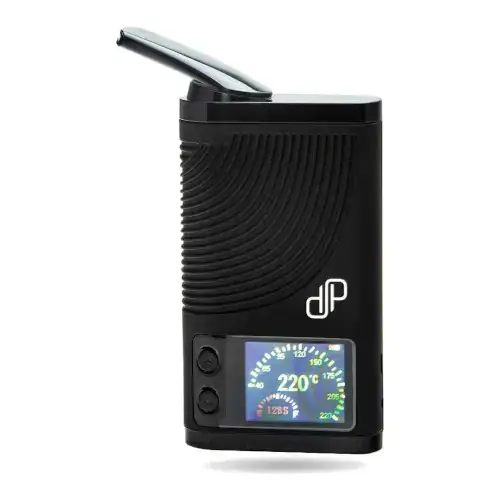
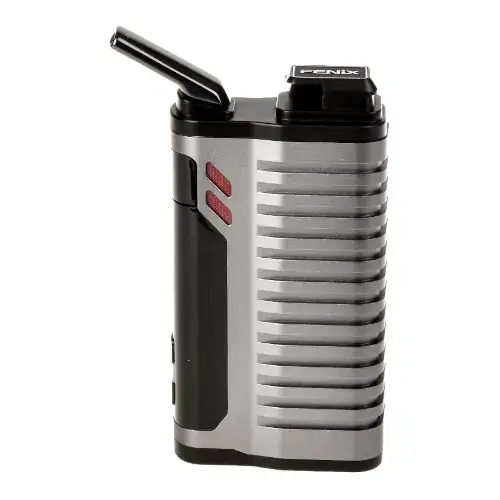
Side-by-side vaporizer comparison including specs, pricing context, and decision guidance.
Boundless CFX and FENiX 2.0 are both portable / convection vaporizers, but they target different priorities. Their listed prices are close ($140 vs $129). Heat-up speed is broadly similar between the two.
Specs Compared
17
Different Specs
15
Shared Specs
2
Overall Overlap
12%
Shared Traits
Quick snapshot of the specs people usually care about first.
Boundless CFX
$140
FENiX 2.0
$129
Pricing is very close between both devices.
Boundless CFX
~30 seconds
FENiX 2.0
<30 seconds
Both devices are in a similar heat-up range.
Boundless CFX
—
FENiX 2.0
~232 grams
Weight is close enough that portability is likely similar.
Boundless CFX
Hybrid Convection
FENiX 2.0
Convection
Heating style differs, which can impact flavor and extraction behavior.
Top specs where these two devices diverge.
Price (USD)
Boundless CFX
$140
FENiX 2.0
$129
Heating Type
Boundless CFX
Hybrid Convection
FENiX 2.0
Convection
Temperature Range
Boundless CFX
100°C-221.1°C
FENiX 2.0
—
Battery Type
Boundless CFX
Internal
FENiX 2.0
—
Battery Capacity
Boundless CFX
2500mAh
FENiX 2.0
4400 mAh
Charging
Boundless CFX
Micro USB
FENiX 2.0
—
Charge Time
Boundless CFX
~30 minutes
FENiX 2.0
2.5 hours
Dimensions
Boundless CFX
120x70x30mm
FENiX 2.0
—
Weight
Boundless CFX
—
FENiX 2.0
~232 grams
Power Adjustment
Boundless CFX
Digital
FENiX 2.0
—
Direct comparison of shared and unique specifications from each device profile. (15 differences, 2 overlaps)
| Specification | Boundless CFX | FENiX 2.0 |
|---|---|---|
| Price (USD) diff | $140 | $129 |
| Device Type | Portable | Portable |
| Heating Type diff | Hybrid Convection | Convection |
| Heat Up Time | ~30 seconds | <30 seconds |
| Temperature Range diff | 100°C-221.1°C | — |
| Battery Type diff | Internal | — |
| Battery Capacity diff | 2500mAh | 4400 mAh |
| Charging diff | Micro USB | — |
| Charge Time diff | ~30 minutes | 2.5 hours |
| Dimensions diff | 120x70x30mm | — |
| Weight diff | — | ~232 grams |
| Power Adjustment diff | Digital | — |
| Oven Type diff | Ceramic | — |
| Brand diff | Boundless Technology | — |
| Chamber Material diff | — | Removable titanium |
| Display Type diff | — | 0.95 inch OLED |
| Manufacturer diff | — | South Reed Technology Co |
Neither is universally better. Boundless CFX fits some priorities, while FENiX 2.0 fits others. This side-by-side comparison highlights the tradeoffs so you can choose based on your own use-case.
FENiX 2.0 is listed lower ($129) compared with Boundless CFX ($140), but live retailer pricing can change.
FENiX 2.0 has the faster listed heat-up time (<30 seconds) versus Boundless CFX (~30 seconds).
Jump into the full comparison hub to pick any two devices and open a canonical side-by-side page.